
Review: Echoes of Aincrad
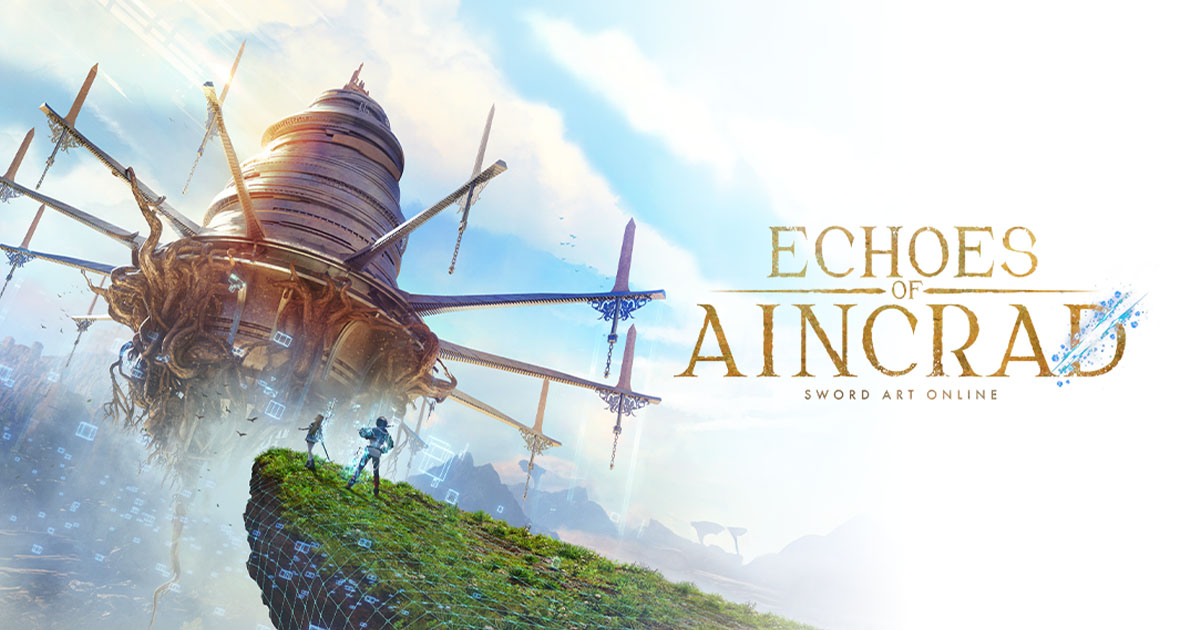
The premise of Sword Art Online has fascinated me for years. Thousands of people enter a virtual-reality MMORPG, only to discover they can’t log out. Die in the game, and you die in real life. Suddenly, clearing dungeons and fighting bosses isn’t just about getting better loot. Everybody’s trying to survive.
That’s a fantastic setup for an RPG, and somehow I’d never actually played a game in the series. So when Echoes of Aincrad was announced, its emphasis on creating your own character and experiencing the beginning of the adventure sounded like my invitation to finally jump in. The trailers looked great, Bandai Namco kindly provided an Ultimate Edition review code, and I was ready to see what I’d been missing.
For the first several hours, I thought I’d found something pretty special.
Then I kept playing.
An Adventure That Starts Strong
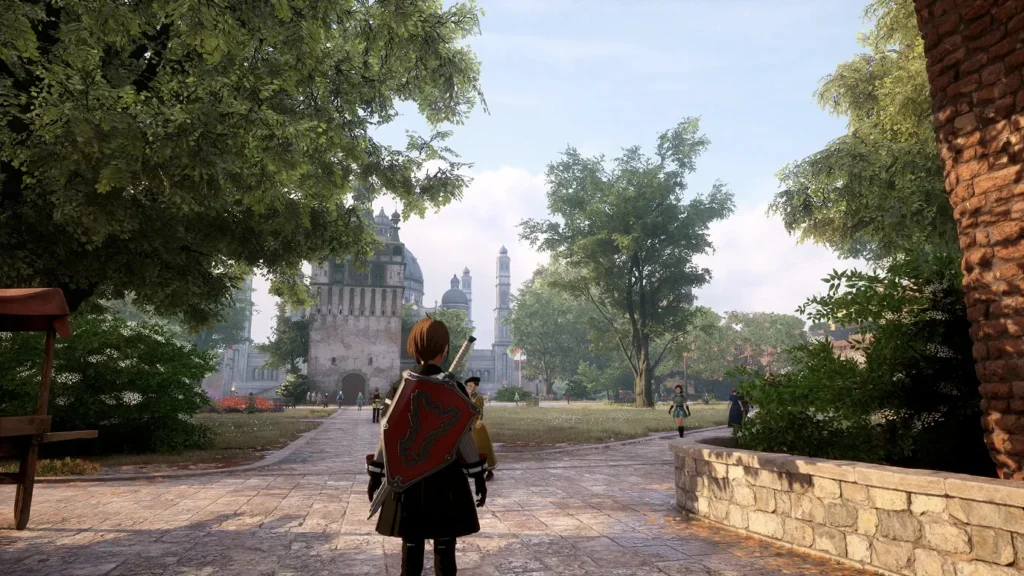
Released in July 2026 for PlayStation 5, Xbox Series X|S, and PC, Echoes of Aincrad puts you in the shoes of a character you create rather than simply handing you an established Sword Art Online protagonist. You enter Aincrad, get swept into its life-or-death predicament, and work through quests while developing your equipment, skills, and relationships with combat partners.
What initially grabbed me was the scale. The first time I opened a quest map, I couldn’t believe how much ground there was to cover. Plains, paths, ruined settlements, dungeons, treasure chests, enemies roaming everywhere. It initially gave me a classic PS2 RPG feel, in the best way. It seemed like the kind of adventure where I could spend an entire evening poking around and somehow forget what I was supposed to be doing.
And for a while, that’s exactly what happened.
I’d head out on a quest, work toward the next safety area, reveal another chunk of the map, detour for chests, and pick fights along the way. There was something almost relaxing about settling into that rhythm. I could lock in, clear the map, and find myself looking forward to the next area.
Occasionally, that reduced map visibility at the beginning of a quest even made navigation feel like a little puzzle. You couldn’t always see the whole route, so finding the next rest point and uncovering what lay beyond it and finding those sweet treasure chests could be satisfying.
I was having fun. That’s important, because my eventual frustrations didn’t come from disliking what the game was trying to do. I liked it enough that I wanted more from it.
Combat Is Great! Until It’s Not.
Thankfully, Echoes of Aincrad gives you a pretty good reason to keep drawing your sword.
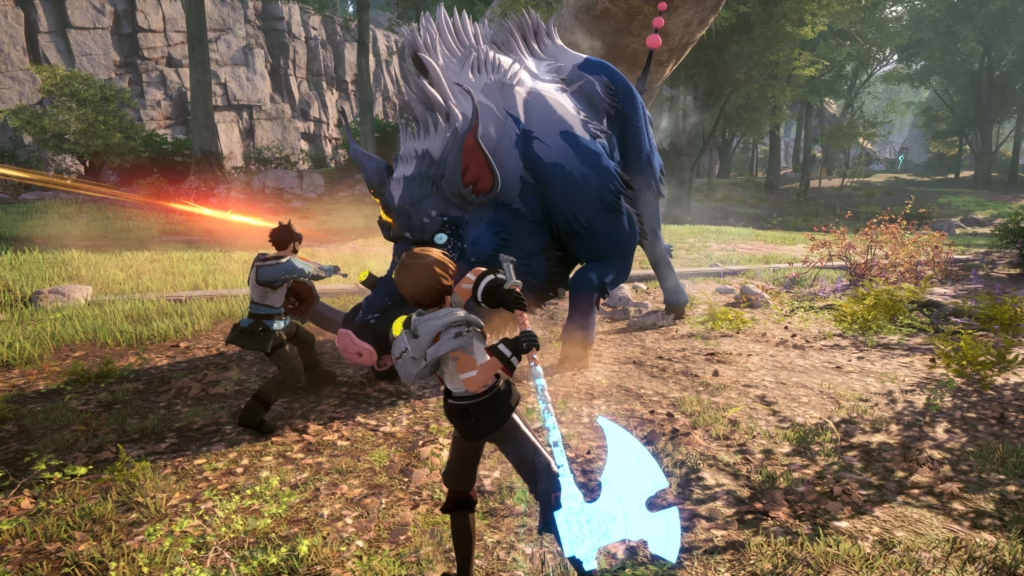
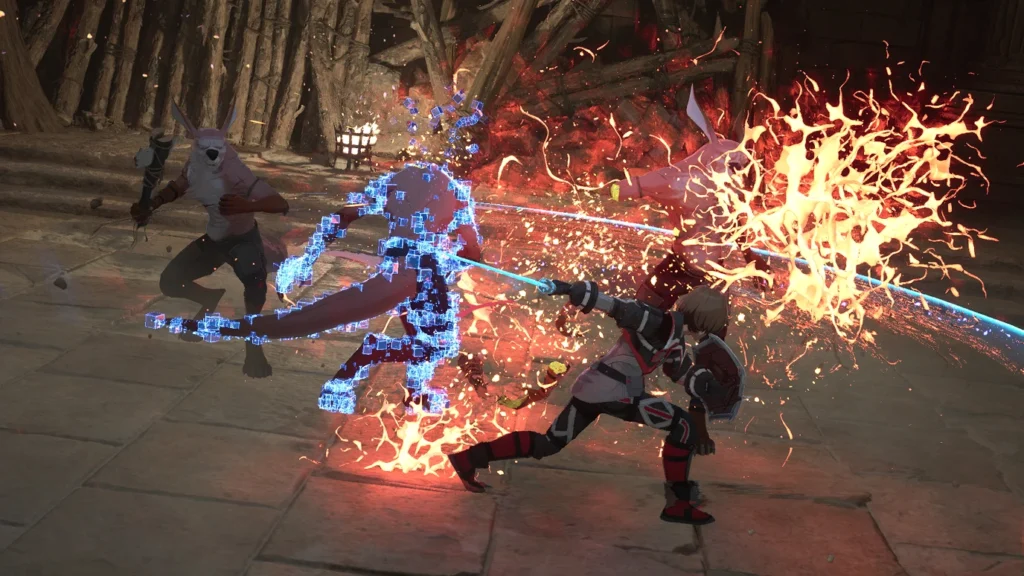
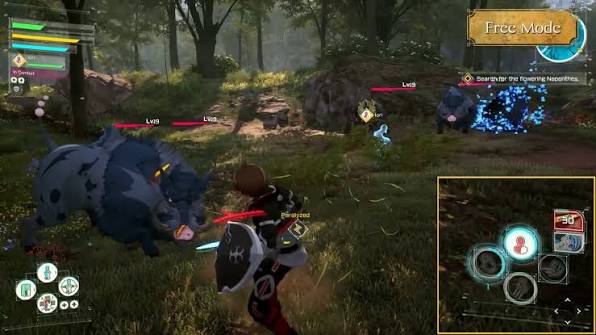
The real-time combat feels satisfying, particularly when you’re moving between enemies and getting into a rhythm of attacks, dodges, and Weapon Skills. There’s this awesome little slowdown effect when you completely overpower an enemy and finish it in one blow. I don’t care how many times I saw that happen. That was SICK.
And the bosses can be genuinely exciting. Bigger encounters ask you to learn attack patterns, react appropriately, and take advantage of openings. There’s a good foundation here, and I enjoyed developing my character and finding increasingly effective ways to dispatch enemies.
Unfortunately, some of those same boss encounters exposed my biggest frustrations.
Stamina management, in particular, could drive me absolutely nuts.
To be clear, stamina wasn’t limiting my ability to run around the map outside combat. The problem was what happened when I actually got into a boss fight.
Dodging, attacking, and other actions consume stamina, which ordinarily encourages you to think carefully about your next move. That’s fine! But certain bosses launch extended sequences of attacks, sometimes while summoning additional enemies into the encounter.
I’d dodge several attacks, find myself surrounded, and suddenly realize I didn’t have enough stamina left to avoid whatever was coming next.
And that’s before accounting for my AI companion, who would sometimes decide that surviving the encounter was apparently optional.
Now I’m dodging, attacking, trying to heal, keeping an eye on my partner, and desperately waiting for enough stamina to actually defend myself.
That leads into another issue: I never found switching companions especially rewarding.
There are multiple characters with different skills and combat styles, but once I had Iori, I rarely felt compelled to use anyone else. Her healing abilities were incredibly useful, and swapping her out seldom felt like a worthwhile trade.
Which is a shame, because partner selection should be an interesting part of preparing for difficult encounters. For me, it usually came down to keeping the companion who could help me survive.
And even then, she’d occasionally get knocked out during those same boss fights.
The game does give you options to coordinate with partners and manage enemy attention, so there’s more to the system than simply watching the AI fight. But in practice, the combination of demanding bosses, limited stamina, and unreliable partner survival could make encounters frustrating for reasons that had little to do with whether I understood the enemy’s attacks.
I still enjoyed the combat overall. I just wish some of these systems worked together more consistently.
So Much Ground, So Little to Discover
Somewhere around the 15-hour mark, I began to realize that the initial exploration loop wasn’t really developing into anything new.
Echoes of Aincrad isn’t a fully open-world RPG. You accept quests from a hub and travel through large, interconnected sections of the world. Safety areas reveal portions of the map and point you toward more treasure and places to investigate.
That sounds great on paper. The problem is that many quests ask you to cross an awful lot of space without giving you much to do along the way.
Sometimes a single outing meant working through six or seven sections before reaching the destination. That could be manageable for a major story quest, but even side quests could demand these enormous treks.
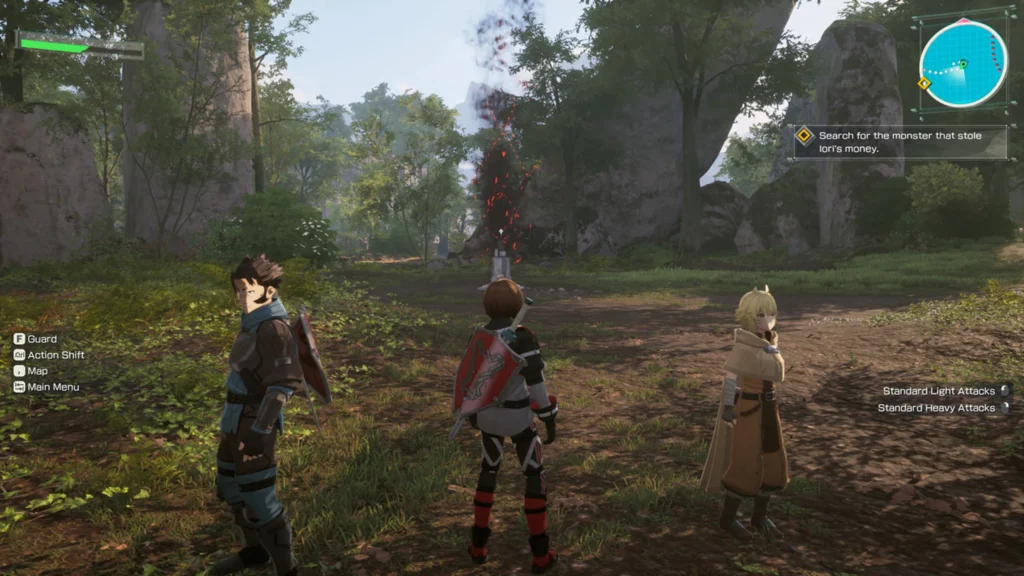
I’d uncover a rest point, open the map, find some chests, clear the enemies, and start looking for the next rest point.
And then the next one.
And then the next one.
Eventually I’d turn in the quest, pick up another, and realize I was about to do the whole thing again.
I don’t need a world to bombard me with activities every ten feet. I love taking my time in RPGs. I’ll happily search every suspicious corner in Dragon Quest for the possibility of finding something interesting.
But the reward isn’t always the item. It’s the feeling that the world has secrets, surprises, or people worth learning about.
Aincrad has plenty of distance between its destinations, but too little that changes how I understand the place. The chests and enemies started feeling like stops on a route rather than discoveries I was excited to make.
And when a map takes that long to clear, simply making it to the end stops feeling like an accomplishment. Sometimes it just feels like finally getting off work.
Where Is Everybody?
What bothered me even more than the repetition was how empty Aincrad felt outside its towns.
I’d come across broken-down villages and interesting-looking locations that suggested people had lived there, struggled there, or left some history behind. This is a world where thousands of players are supposedly trapped together, trying to survive something horrifying.
There’s enormous potential for chance encounters, little human stories, or adventurers dealing with the consequences of their situation.
Instead, most of my time outside the hubs was spent traveling between enemies, chests, and checkpoints.
Where the heck IS everybody?
That absence became a much bigger problem when the story wanted me to care about its characters.
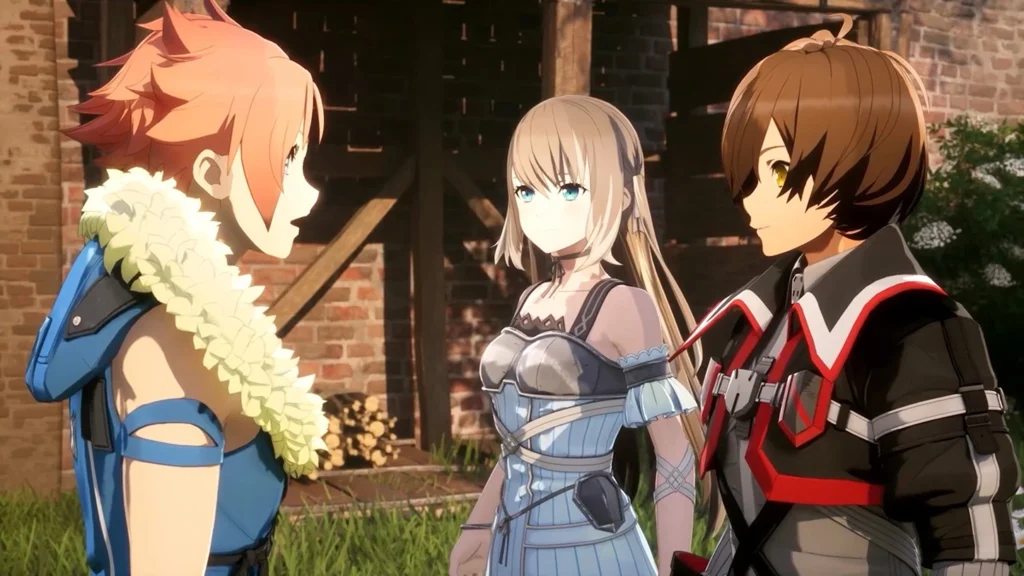
There are genuinely serious moments in Echoes of Aincrad. People struggle, relationships are tested, and some events are meant to be shocking or heartbreaking.
I won’t spoil the specifics, but more than once I recognized that a scene was supposed to hit hard and felt almost nothing.
Not because I objected to what happened. I understood why it mattered. But between meeting a character and returning for their next major story moment, I’d spent so much time running through largely lifeless areas that I barely felt connected to them anymore.
That’s an especially painful weakness for a story with such a strong central premise. If dying in this world means dying for real, I should be anxious about the people sharing that danger with me.
Instead, I often felt more invested in getting through my quest checklist than in the adventurers it was supposedly about.
A few more meaningful encounters along those routes, or opportunities to learn about people during exploration, could have made a tremendous difference.
Maybe I’m Not the Audience After All
The funny thing is, after playing Echoes of Aincrad, I’ve watched some scenes from the anime and can absolutely imagine longtime Sword Art Online fans appreciating how closely the game tries to capture its world.
There’s real value in that. If you’ve spent years loving Aincrad, revisiting its atmosphere, recognizing familiar characters, and experiencing the setting through your own created hero may be enough to make the long journeys worthwhile.
And the enjoyable combat certainly helps.
But that’s not the perspective I brought into the game.
I came because the announcement made this feel like a welcoming way into a franchise I’d wanted to understand for years. I didn’t want to bring an existing attachment to Aincrad with me. I wanted the game to help me build one.
And for me, it never quite did.
After a strong opening, Echoes of Aincrad settles into a routine that asks too much of its world without filling it with enough interesting experiences or convincing relationships. I can see the appeal, and I genuinely enjoyed parts of it. I just can’t ignore how often I felt like I was waiting to get back to those parts.
If you’re already a fan, there’s a reasonable chance this adventure will mean more to you than it did to me. If you’re a newcomer looking for an action JRPG, though, there are too many other excellent choices for me to recommend this one enthusiastically.
And that’s a shame, because I really wanted to love it.
Decent
out of 10
The verdict
Echoes of Aincrad makes a promising first impression with satisfying action combat, tense boss encounters, and enormous areas that initially feel exciting to explore. Unfortunately, repetitive quests, an underpopulated world, frustrating stamina management, and an underwhelming companion system gradually drain that enthusiasm, making the game's emotional moments difficult to connect with. Longtime Sword Art Online fans may find more meaning in its familiar setting, but as a newcomer, I came away wishing the game had given me more reasons to care about Aincrad itself.
- Platforms
- PlayStation 5, Steam, Xbox Series X|S
- Publisher
- Bandai Namco
- Released
- Jul 9, 2026


5 comments
Was interested in this game but after reviews came out it became wait for a sale game
The episode between you and Slam discussing this game took me from being interested, to deciding I have no interest in ever playing this game. Maybe if it ever dropped as low as $10…$5 would be even better though… XD
To echo what others in the community have said, I was interested in this game initially, but after hearing you guys talk about it and watch other reviews, that interest quickly disappeared. If the price dropped super low, I might have a look, but even then, my backlog is massive enough as is.
Still interested in the game, but definitely will wait for it to go on sale to try it out.
This game was definitely on my radar for 2026 until it wasn’t. I think It’ll be some quick fun if it ever goes on sale!