
Retro Review: The Legend of Dragoon
When The Legend of Dragoon arrived in North America in 2000, Sony was taking an enormous swing at the JRPG genre. Four PlayStation discs, spectacular CGI cinematics, elaborate pre-rendered environments, and a battle system built around precise button timing made it one of the platform’s most ambitious first-party projects. While Squaresoft was releasing genre-defining RPGs seemingly every Tuesday, Sony wanted an adventure of its own.
It never became the franchise fans hoped for, but they haven’t stopped gushing about it!
I’ve replayed it several times over the years, but never made it to the credits. I even dug out my original PlayStation memory card, only to discover that I had absolutely no idea where my younger self had left off. So, with some encouragement from The Level Up Legacy Discord, who voted for it in a poll I may have slightly influenced, I finally locked in and finished it on PS5.
And I’m glad I did! Though it made me work for much of that happiness.
An Enormous Adventure With an Even Bigger Personality
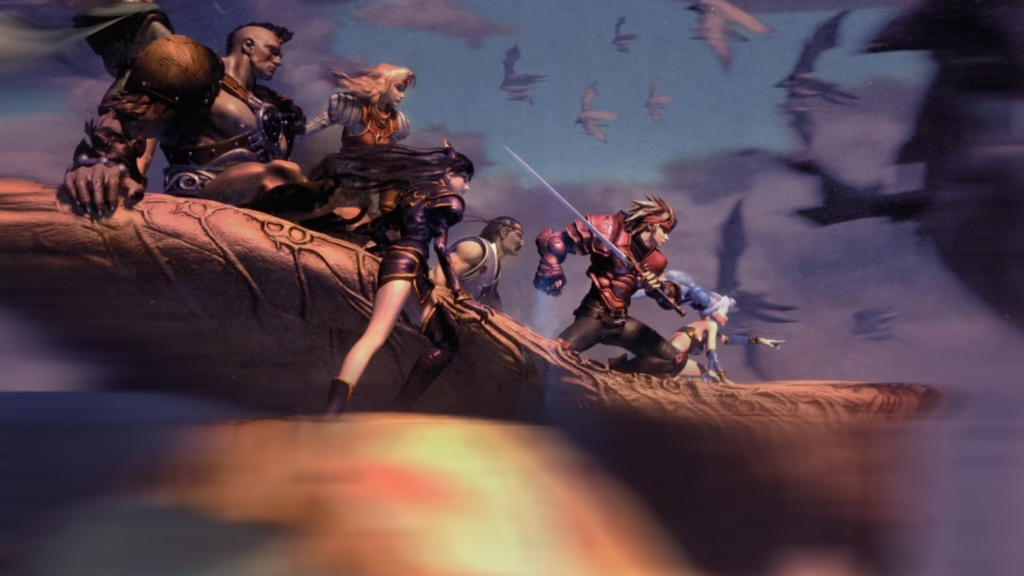
The Legend of Dragoon begins with Dart returning to his hometown of Seles to find it destroyed and his childhood friend Shana taken prisoner. What starts as a rescue mission draws him into a war between kingdoms, then gradually unfolds into a sprawling fantasy about ancient civilizations, dragons, and conflicts that have been haunting the world for eleven thousand years.
Sony throws spectacle at you immediately. The aggressively turn-of-the-millennium title theme made me feel things, the opening cinematic is packed with destruction and intrigue, and Dart looks like Cloud Strife joined the Power Rangers. Red Ranger Cloud Dart never looked so good. This game was committed to being absolutely SICK.
What surprised me on this playthrough, though, was how much care went into its quieter moments. Characters gesture and react during conversations; events can unfold while you’re still moving through an environment. During an early escape with Lavitz, an arrow suddenly strikes him in the middle of your journey rather than waiting for an elaborate cutscene. It’s a tiny detail today, but it gives a PlayStation-era adventure a welcome sense of life.
Lavitz himself won me over again immediately. He’s honorable, funny, and genuinely feels like Dart’s friend instead of another mandatory party member. These relationships help ground the increasingly ridiculous mythology.
And nothing will happen to Lavitz because he’s just too lovable. Right? … Right?
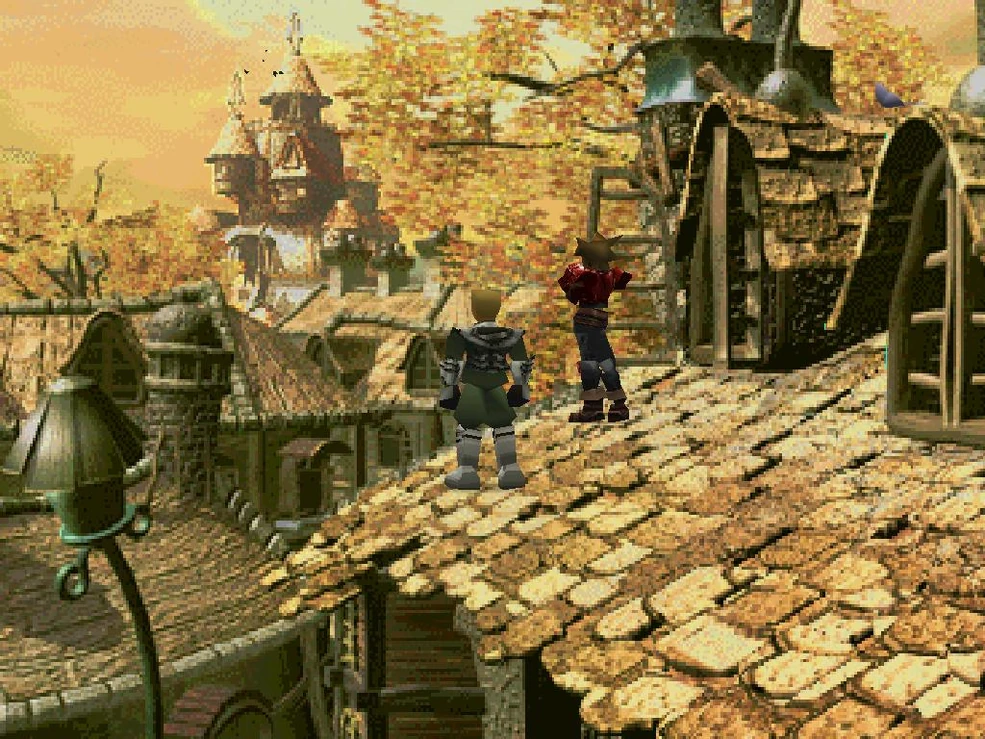
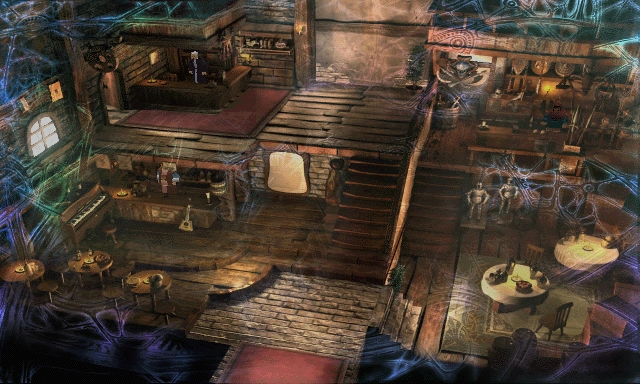
Of course, the gorgeous pre-rendered scenery has one drawback: occasionally the exit looks like a JPEG that’s three pixels darker than the wall. I spent enough time running Dart into scenery that I briefly considered apologizing to modern games for their yellow-painted ledges.
Briefly. Let’s not get carried away.
Additions Still Rule
But the reason I stayed invested for more than 50 hours wasn’t the scenery. It was combat, particularly the Addition system.
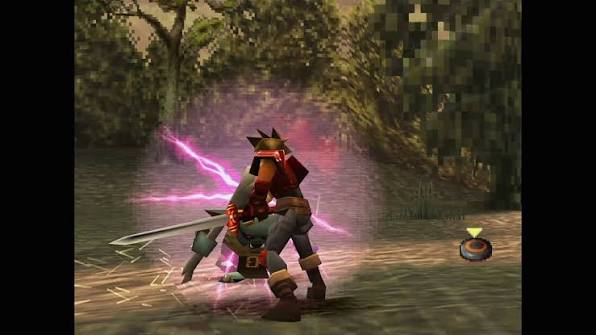
Rather than choosing Attack and waiting for a character to swing, Additions ask you to press buttons in rhythm to extend a combo. Enemies can counter mid-sequence, forcing you to react with a different input. Land the whole thing and your character dramatically shouts the attack’s name, which never stopped being satisfying.
Even better, repeated successful uses strengthen each Addition, eventually helping unlock a character’s final techniques. Different combos favor raw damage or Spirit Point generation, creating legitimate decisions about what to equip. Naturally, I refused to move on to stronger attacks until I’d maxed out the ones I already had.
It’s a healthy, reasonable approach to video games.
That progression constantly dangles another achievement in front of you. I maxed out Dart’s and Albert’s Dragoon levels, experimented with party composition, and eventually turned Meru into an absolute menace. And every time I thought I was finished grinding, the game handed me another Addition.
It’s like the game knew I have a problem.
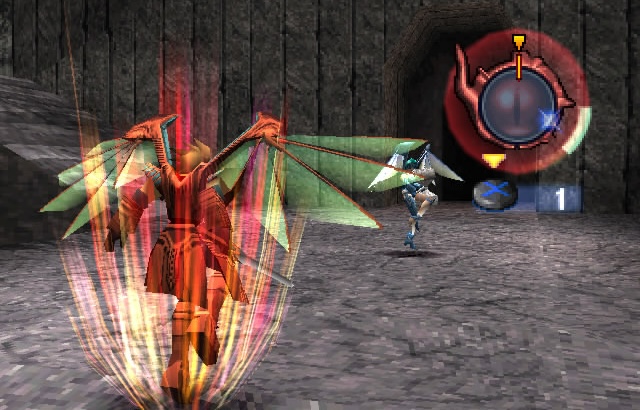
The Dragoon transformations themselves are super cool, especially early on. Collect enough Spirit Points and your party can become winged, armored warriors with access to powerful magic. Combat also has a thoughtful defensive rhythm. Guarding reduces incoming damage and restores health, which matters when you’re deciding between attacking, building Spirit Points, transforming, or surviving another turn.
And I love the character-specific details. Albert inherits Lavitz’s spear-fighting techniques, but his version of Rod Typhoon looks subtly less practiced. That’s a small animation choice that communicates character through combat, and it’s exactly the kind of thing that makes this game feel special.
A Heartfelt Story Fighting Its Own Translation
The story of The Legend of Dragoon, admittedly, fumbled more than I expected due to the translation oddities. But the underlying themes of legacy, revenge, prejudice, and inherited responsibility are more thoughtful than I expected.
Dart carries the anger of losing his home. Albert faces duties he never anticipated. Rose is effectively walking history, carrying the consequences of events thousands of years old. Meru and Kongol each bring perspectives shaped by conflicts between the world’s peoples. Slowly, the party begins to feel like several different pieces of the same ancient story.
I appreciated that more as an adult than I ever did when I first played. Beneath the dragons and magical artifacts, The Legend of Dragoon keeps asking what people should do with the damage previous generations left behind. That’s some pretty ambitious stuff for a game where half the cast transforms into winged, mystical, superheroes.
Unfortunately, the English localization doesn’t always stick the landing with these grand themes. Dialogue swings between perfectly serviceable to spectacularly awkward, while terminology and attack names can differ between menus and spoken lines.
When someone is trying to explain eleven thousand years of Wingly history, clarity is kind of important, my friends.
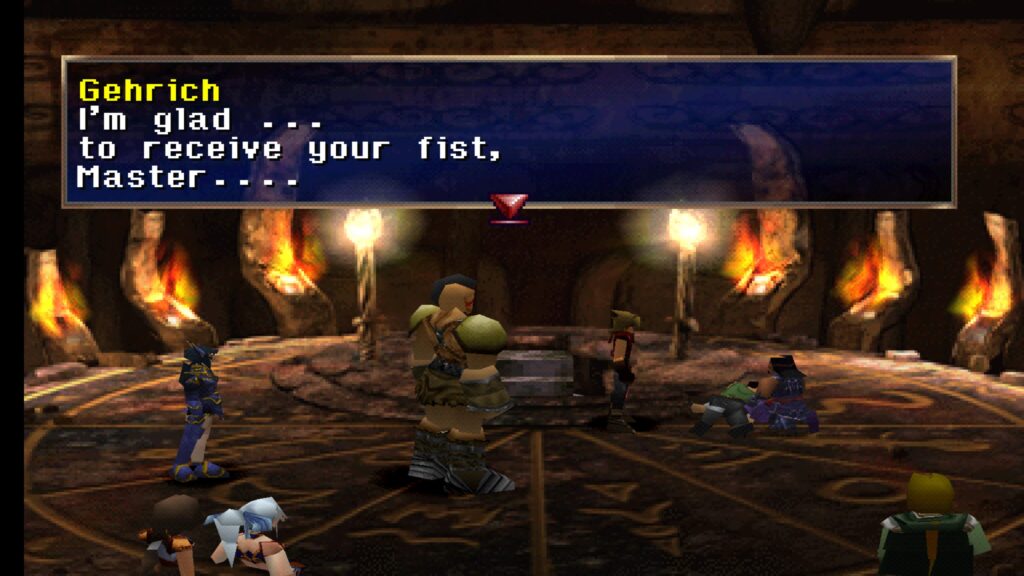
And while I couldn’t always tell if it was the translation or the actual writing that was odd, I rarely struggled to understand what the characters felt. Dart’s anger, Rose’s exhaustion, and the friendship between the party members consistently came through, even when the wording seemed determined to get in its own way.
The game is also willing to disrupt its own status quo, making losses and unexpected responsibilities matter. That earnestness carries it through the messier stretches and becomes particularly important in its final hours.
Some of This Aged Like Fine Milk
For all my affection, The Legend of Dragoon regularly tests the patience of anyone accustomed to modern RPG conveniences. Its most baffling restriction is the 32-item inventory limit. You can stockpile enough equipment to supply a small kingdom, but apparently a reasonable supply of healing items would upset the natural order.
That restriction can also punish experimentation. Certain rare enemies are far easier to handle with consumables you might have discarded hours earlier, leaving you to wonder whether you were supposed to possess prophetic knowledge about future encounters.
And I am no prophet, can confirm.
Addition management is another unnecessary chore. There’s no convenient notification when a technique levels up or reaches its maximum, so obsessive players like me need to repeatedly open menus to check progress. After hundreds of battles, it adds up. Even though that menu music is so good.
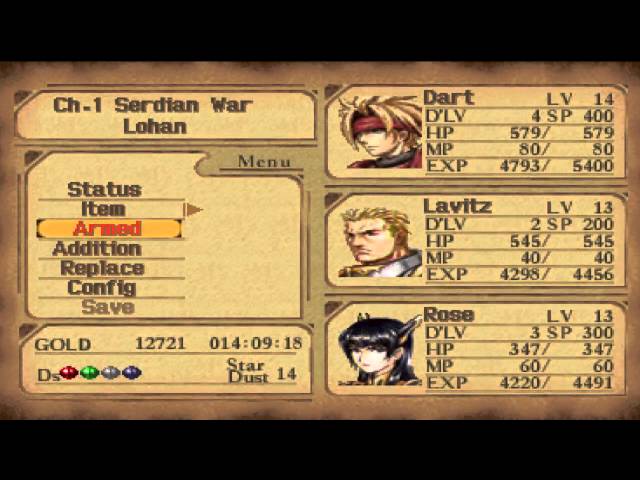
And the backtracking—good grief. The adventure repeatedly sends you through old areas with little meaningful fast travel until near the end. I did make that worse by discovering embarrassingly late that R2 shows your next destination on the world map.
That one’s on me. Mostly.
More disappointing is how the Dragoon system loses some of its usefulness later on. Once transformed, you’re committed for multiple turns, even if you only needed a particular spell. Certain bosses punish Dragoon forms, and a well-developed regular Addition can sometimes deal more damage than the transformation that’s supposed to be your ultimate power.
That’s more than an annoyance; it’s a missed strategic opportunity. Let me use Albert’s Rose Storm for protection and then cancel the transformation, even if it costs the rest of my Spirit Points. Giving players that choice would make the system more flexible and reward smart decisions, especially against bosses designed to punish Dragoons.
Instead, I occasionally found myself asking Dart to please stop being a magical dragon warrior so he could hit something harder. This was not ideal, to say the least.
An Uneven Journey With a Surprisingly Strong Finish
The final stretch isn’t flawless. There are pacing problems, repeated locations, and emotional moments that don’t always receive the buildup they deserve. But when the ending finally arrives, The Legend of Dragoon does something I didn’t expect: it makes the adventure’s sprawling history feel personal.
Without spoiling the specifics, the final dungeon reflects the characters’ pasts in ways that bring the larger themes into focus. After so many hours of inherited conflicts and unresolved grief, their stories begin to feel as though they’ve been building toward something meaningful.
And despite everything that frustrated me, I finished feeling genuinely satisfied.
That’s why my recommendation comes with a qualification. If you love old-school JRPGs, appreciate earnest, though flawed, storytelling, and don’t mind wrestling with outdated systems, The Legend of Dragoon has real magic. The PS5 release’s rewind and quick-save features help, too. If you’ve grown accustomed to modern conveniences, however, there’s a lot of crust on this bad boy.
Still, completing it made me more convinced than ever that this game deserves a remake. Not because it’s secretly flawless, but because its best ideas deserve room to breathe without twenty-five years of friction weighing them down.
Give me a polished script, smarter inventory, better travel options, and that wonderful Addition system intact, but updated to include more strategic options and I’d be there day one, baby.
Good
out of 10
The verdict
The Legend of Dragoon is an ambitious, wonderfully sincere PS1 RPG whose addictive Additions, memorable cast, and satisfying conclusion explain why fans have championed it for decades. Its restrictive inventory, uneven localization, repetitive backtracking, and surprisingly inflexible Dragoon mechanics make the journey harder than it needs to be. It's not an easy recommendation for every modern player, but for anyone willing to embrace its rough edges, there's something genuinely special worth discovering.
- Platforms
- PlayStation, PlayStation 5
- Released
- Jun 13, 2000


11 comments
Haven’t played this one since release, but I remember really enjoying it at the time. It felt grand, fresh, a worthy rival to FF7 (though never really truly surpassing it in anyway). I feel like it’d be rough nowadays so im kind of afraid to revisit lol.
You’d still get a kick out of it, I’d imagine. But like I said in the review… some things did not age well
Still need to find time to try this out.
I would agree , specially nowadays . Anything lower then a 7 then we might have to have words lol
This is a game I really want to get back into. I had so much fun with the combat and the music and world design is amazing. But that English translation took me out of it! It’s still on my list of retro games to play, but further down than before.
It’s a game I agree I need to get back too. But where is the time
I know objectively it doesn’t deserve higher, but it’s always going to be a 10 in my heart
I love when a player is loyal to their games through thick and thin. For example, FF 13 will always be a 10/10 for me!
Same here. FFXIII is one of my GOATs
This is one of those games that I want to play but it needs a remaster or remake to make me feel good about spending my time with it.
Defiantly needs one of these. Cause people might be more inclined to try it out if it got remade.