
Preview: Persona 4 Revival — My Nostalgia Wasn’t Ready for This

Persona 4 Golden is still my favorite Persona game of all time. It’s the game that introduced me to the series, which means Persona 4 Revival has the unfortunate responsibility of remaking something my nostalgia has spent years convincing me is basically perfect.
Good luck, Atlus.
But after getting my hands on Persona 4 Revival at PAX West, I walked away feeling something I hadn’t anticipated. Seeing these characters again, experiencing their stories with new performances, and exploring familiar locations with modernized gameplay genuinely made me emotional.
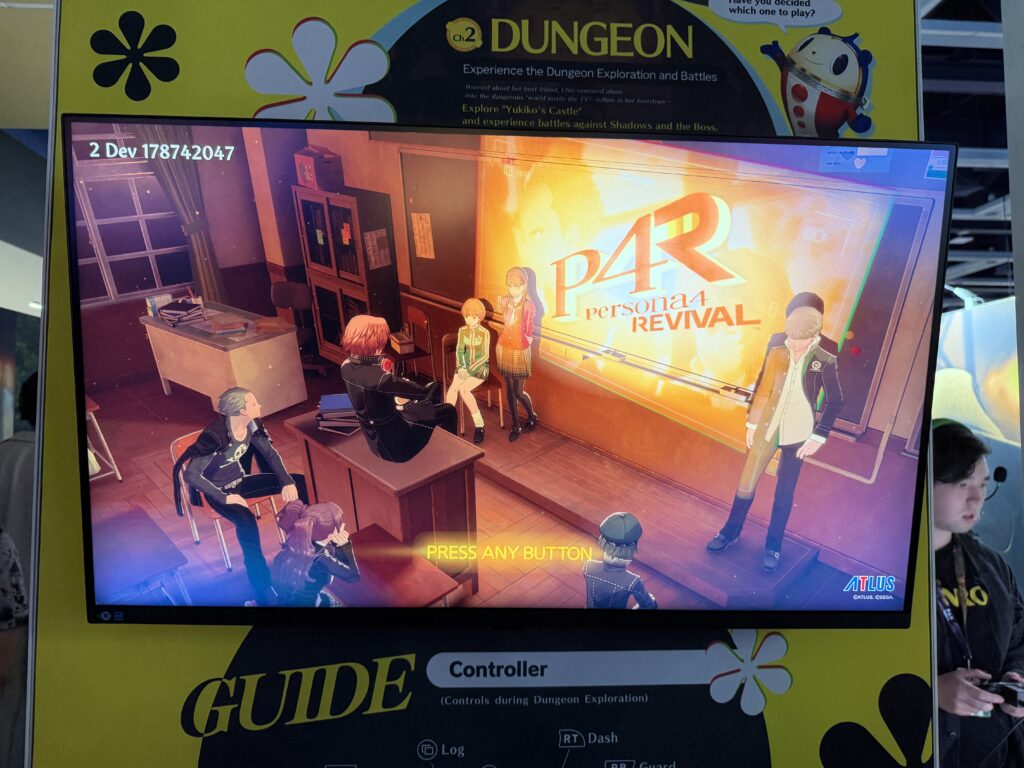
The demo was divided into two sections. The first revisited the opening of the TV World with Yu and Yosuke, introducing the new voice acting, cinematics, and early combat. The second jumped ahead to Yukiko’s Castle, where I explored roughly half the dungeon before reaching Chie’s Shadow confrontation.
It was a limited sample, and plenty of questions remain. But what I played gave me tremendous confidence that Atlus understands why this adventure means so much to its fans.
Back to the Town That Started It All
Years ago, after finally replacing a PlayStation Vita I’d sold during a particularly broke period after college, I wandered into a GameStop outside Chicago. An employee enthusiastically recommended Persona 4 Golden, insisting it was one of the greatest games ever made.
I was skeptical. Anime teenagers jumping into televisions to fight monsters wasn’t exactly selling me. But I eventually trusted his recommendation, bought the game, and discovered he was right.
The music, murder mystery, calendar system, and combat immediately grabbed my attention. More importantly, I fell in love with the wonderfully believable, hilarious, and occasionally ridiculous group of friends at its center.
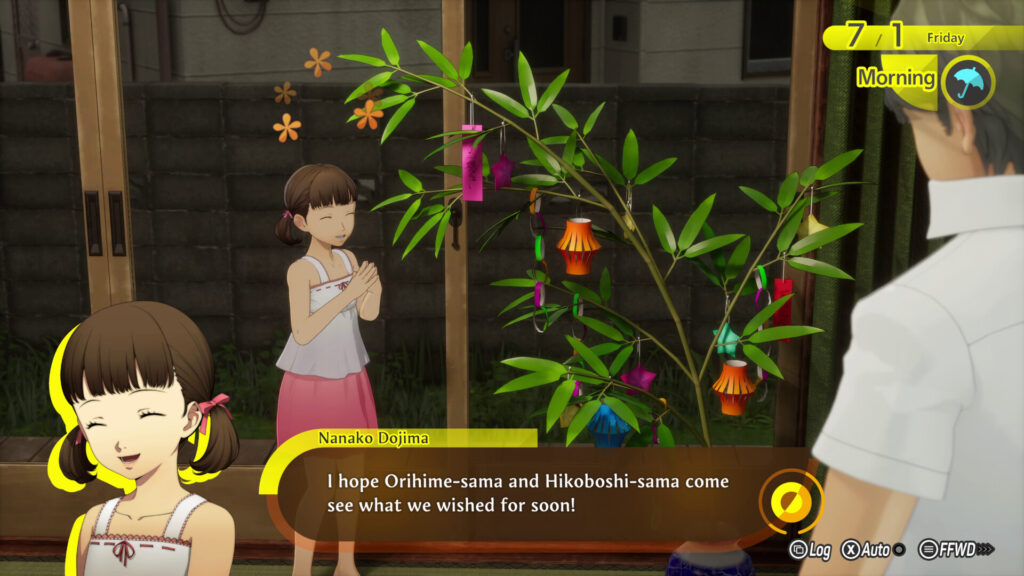
For anyone unfamiliar with Persona 4 Golden, the story follows a teenager who moves to the quiet rural town of Inaba, where what should be an ordinary year living with his uncle and cousin quickly becomes something considerably stranger.
A series of mysterious murders, an urban legend called the Midnight Channel, and a supernatural world accessible through televisions eventually lead to the formation of a high school Investigation Team.
You know, typical teenage activities.
But beneath the murder mystery is an incredibly heartfelt story about friendship, identity, and confronting the parts of ourselves we’d rather keep hidden.
Familiar Combat With Some Incredible New Tricks
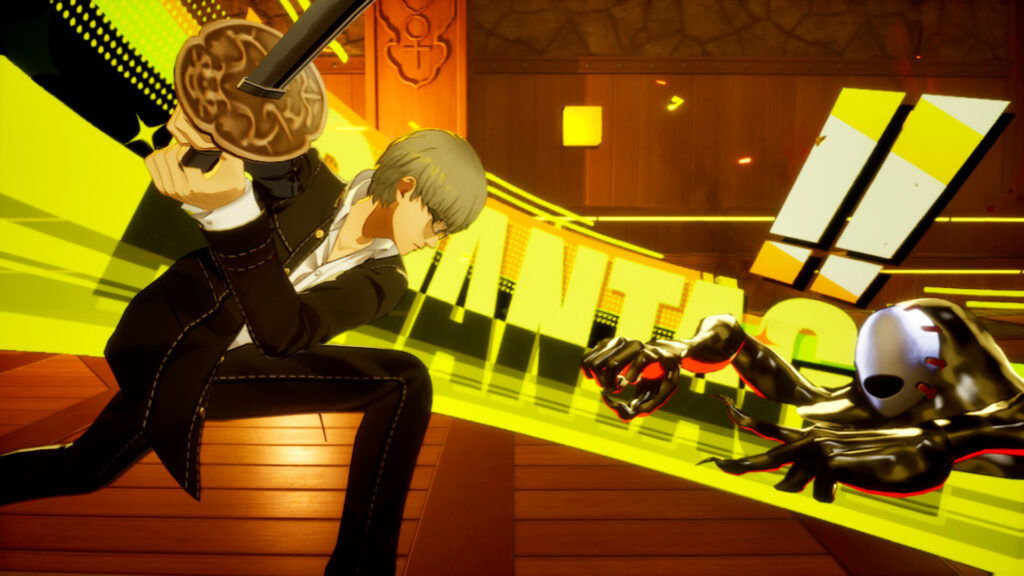
The first thing that impressed me about Persona 4 Revival was how effortlessly its combat blends the original game’s identity with the improvements Atlus has made in Persona 5 Royal and Persona 3 Reload.
The familiar foundations remain intact. Exploiting weaknesses grants additional actions through the 1 More system, knocking enemies down creates opportunities for All-Out Attacks, and careful party management remains important.
But everything feels faster, smoother, and considerably more stylish.
The interface looks fantastic, animations have significantly more personality, and the revamped All-Out Attacks are particularly satisfying. Baton Pass also makes an appearance, allowing players to hand additional turns to teammates after exploiting weaknesses.
I can already imagine the ridiculous combinations I’ll be experimenting with.

Atlus has also revealed a new mechanic called Prime Time, which allows players to build a gauge and unleash consecutive actions, use skills without their usual costs, ignore enemy resistances, and freely chain Baton Passes. These sequences can culminate in a powerful finishing attack called a Series Finale.
I didn’t get to explore Prime Time’s full potential during the demo, but it sounds like exactly the sort of system I’ll spend an unreasonable amount of time trying to break.
One smaller addition I particularly appreciated was the ability to guard against Shadows while exploring dungeons. Previously, getting caught by an enemy could leave you scrambling to recover. Now, a properly timed guard can stun the Shadow and create an opportunity to counterattack.
It’s a relatively minor change, but it makes dungeon exploration feel more interactive while rewarding attentive players.
What impressed me most was that none of these additions made Persona 4 Revival feel like an entirely different game. Atlus appears to be applying lessons from its more recent RPGs without abandoning the turn-based systems that made the original so enjoyable.
The Characters Feel More Alive Than Ever
As excited as I was about the gameplay, my biggest concern going into Persona 4 Revival involved its new English voice cast.
I’ve spent years with these characters, and their original performances have become inseparable from how I remember them. Recasting beloved characters is always risky, particularly when those personalities are such an essential part of the experience.
Thankfully, my concerns largely disappeared during the demo.
Yosuke sounded fantastic, Chie sounded fantastic, and by the time I reached Chie’s Shadow confrontation, I realized I wasn’t mentally comparing their performances to the originals anymore. I was simply enjoying Persona 4.
That’s a huge compliment to the new cast, who managed to make these characters feel familiar without relying entirely on imitation.
The improved presentation makes an equally significant difference. Character portraits are more expressive, 3D models communicate emotions more naturally, and familiar conversations benefit tremendously from improved animation and cinematic direction.
And the new anime footage was SICK.

Atlus has partnered with MAPPA, the animation studio behind productions like Jujutsu Kaisen, to recreate the game’s animated sequences. Watching Yu’s awakening play out with this level of detail was incredible.
I’ll admit that seeing those familiar moments brought back considerably more emotion than I expected.
I’m a grown man with kids, and apparently all it takes to make me sentimental is a teenager summoning a supernatural manifestation of his personality.
What can I say? I’m a simple man.
Exploring a Reimagined Yukiko’s Castle
The second portion of my demo took place inside Yukiko’s Castle, offering a better look at how Atlus is updating the original dungeon exploration.
Rather than completely rebuilding the environment into something resembling the handcrafted Palaces of Persona 5 Royal, the remake appears to preserve much of the original dungeon structure while improving its presentation and navigation.
Yukiko’s Castle was immediately recognizable, but its environments felt more detailed, its transitions smoother, and the overall experience considerably more polished.
One interesting addition is Pathfinder, a navigation feature that highlights the route toward your next objective.
Initially, I wasn’t particularly enthusiastic. Part of what I enjoy about dungeon exploration is wandering around, discovering treasure, and occasionally forgetting where I was supposed to be going.
It’s called adventure, and getting lost is part of the job!
To my surprise, Pathfinder actually made it easier to identify opportunities for exploration. By highlighting the intended route, it also made the alternative paths more obvious.
For players primarily interested in progressing through the story, it’s a welcome convenience. For those who prefer exploring independently, Atlus confirmed during its PAX panel that Pathfinder can be disabled in the full game.
That’s exactly the approach I want from a modern remake: improve accessibility while preserving meaningful choices for players who prefer the original experience.
Preserving What Makes Persona 4 Special
There is one area of Persona 4 Revival that I’ll be watching particularly closely, and it has very little to do with gameplay.
A significant part of what makes Persona 4 Golden so memorable is how complicated its characters can be. Their insecurities, fears, social expectations, and personal struggles aren’t always comfortable subjects, and the story isn’t afraid to explore them.
Characters like Kanji and Naoto have inspired years of discussion precisely because their experiences touch on complicated questions of identity, masculinity vs. femininity, social pressure, and self-acceptance.
I don’t want the remake to flatten those struggles into simpler narratives.
These stories deserve thoughtful treatment, but preserving their emotional complexity matters more to me than making every character fit neatly into one interpretation.
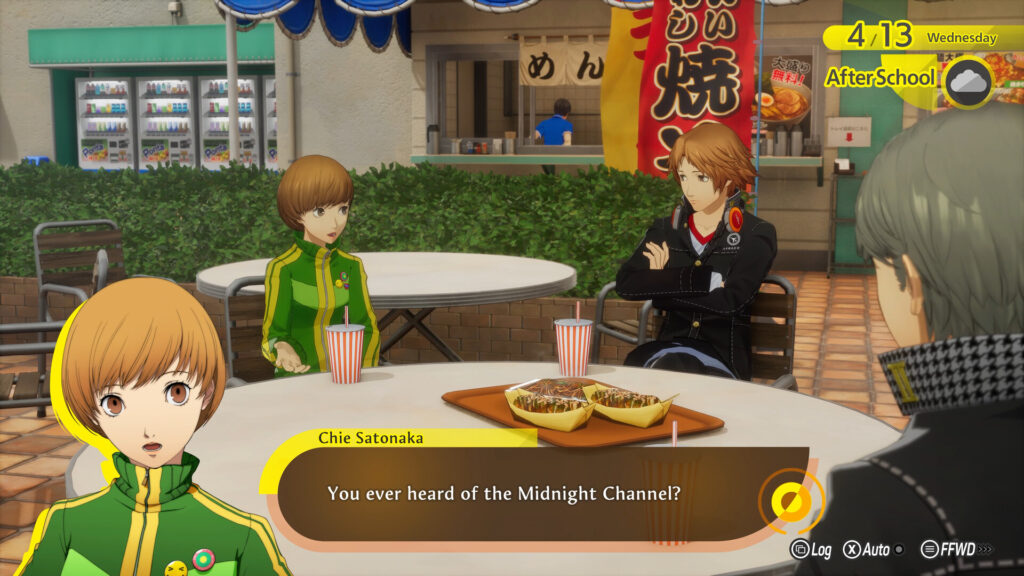
Thankfully, Atlus has repeatedly emphasized that while dialogue and presentation are being refined, the original characters, their personalities, and the story’s central themes remain intact.
That’s encouraging, although a brief demo can’t demonstrate how successfully every character arc will be handled.
I’m excited about the combat improvements, new cinematics, and additional content, but those things are ultimately secondary.
The characters are what made me fall in love with Persona 4 Golden.
If Persona 4 Revival can preserve those relationships while allowing players to experience them with greater emotional depth, Atlus could have something truly special.
Editions, Preorders, and Release Dates
Persona 4 Revival launches February 18, 2027, on PlayStation 5, Xbox Series X|S, and PC, with the Nintendo Switch 2 version arriving May 20, 2027.
For digital buyers, Atlus is offering three editions: Standard ($69.99), Digital Deluxe ($84.99), and Digital Premium ($99.99). The Deluxe Edition includes additional Personas from Persona 3 Reload and Persona 5 Royal, along with a Velvet Outfit Set. The Premium Edition adds more costumes and music from both games.
Physical collectors have a few options as well. Alongside the Standard Edition, there’s a $249.99 Collector’s Edition featuring a protagonist and Izanagi statue, SteelBook, artbook, keycaps, keychain, additional DLC, and a collector’s box. It’s a fantastic-looking package, although my wallet has already filed a formal complaint about needing two.
Eligible preorders also include the P3R & P5R Extra BGM Set, adding six tracks from the two games.
For my fellow Nintendo collectors, Atlus has confirmed a physical Switch 2 Standard Edition, but whether it contains the full game on the cartridge or uses a Game-Key Card remains unconfirmed. I’m very much hoping for the former.
Where to preorder:
- Physical: Amazon Standard | Amazon Collector’s Editions | GameStop physical and Collector’s Editions | Best Buy Standard and Collector’s Editions | Target Standard and Collector’s Editions | Walmart Standard and Collector’s Editions
- Digital: PlayStation Store | Xbox Store | Steam
Availability and retailer-exclusive bonuses may vary.

A Return Worth Waiting For?
As someone who originally fell in love with Persona 4 Golden on the Vita, I’m thrilled to see this adventure returning to a Nintendo handheld. But I’m considerably less thrilled about waiting three additional months for that opportunity.
I love you, Atlus, but I’m not waiting until May to revisit Inaba.
And while we’re discussing the Switch 2 release, here’s hoping the physical edition contains the complete game on its cartridge rather than relying on a Game-Key Card. A collector can dream.
For newcomers, Persona 4 Revival could become an excellent introduction to one of the genre’s most beloved adventures. Returning fans, meanwhile, have the opportunity to rediscover familiar characters and places in a way that feels genuinely fresh.

5 comments
So excited for this game to come out next year, and it is definitely going to be a day-one buy for me!
Devastated that’s Switch 2 release is delayed. I think it’s gonna be awesome handheld but I’m not sure I can wait until May for what is one of my favourite games of all time.
I think this may eclipse P5R
I was going to play this day 1, but knowing the amount of games coming out around that time, Im not sure if I’ll get around to it right away. Torn!
I’m so hyped for this. I’ve been trying to play this game for some long, but something would distract me. Getting this remake will be the perfect time to play it.
After playing Persona 5 Royal and Perona 3 Reload; definitely looking forward to this one!