Xbox Project Helix Could Cost $1,800. Console Gaming Is Getting Out of Hand
With rumors suggesting next-generation consoles could cost as much as $1,800, gaming is becoming an increasingly expensive hobby. Between skyrocketing hardware prices, digital ownership concerns, and diminishing returns, is it time to rethink the future of console gaming?

I’ve been playing video games for most of my life, and I’ve watched console generations go from exciting technological leaps to increasingly expensive upgrades. But the latest Xbox rumor might be the clearest indication yet that something has gone terribly wrong with the economics of this hobby.
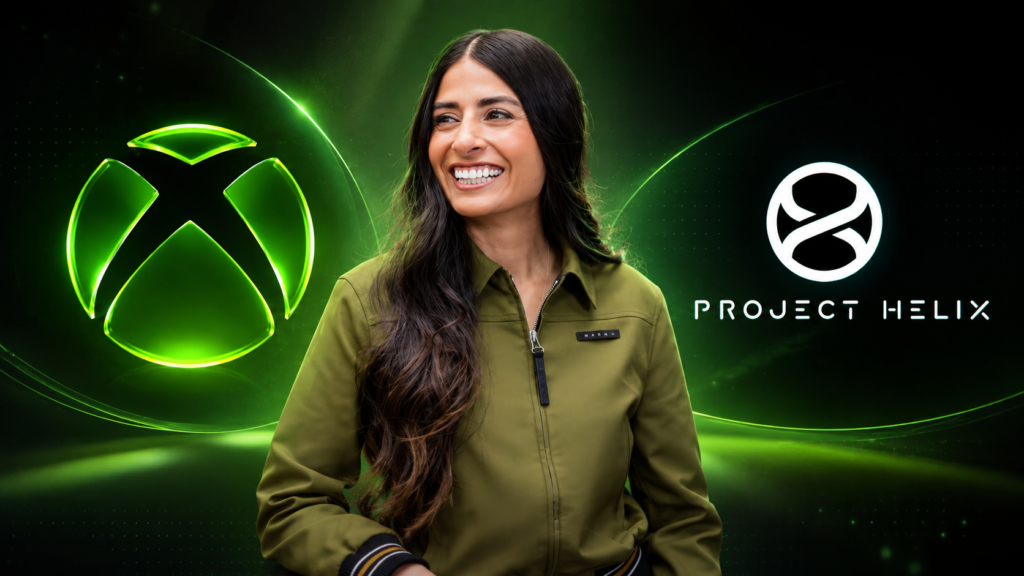
The next Xbox could cost as much as $1,800.
Not a custom gaming PC. Not a collector’s edition bundled with a list of exclusives. A console.
According to Fortune’s October 20 report, Microsoft’s next-generation Xbox, codenamed Project Helix, has reportedly been internally projected to cost between $1,200 and $1,800, unless Microsoft subsidizes the hardware. A 2028 launch is also reportedly being considered.
These are projections, not announced retail prices. But when $1,200 is the optimistic end of a conversation about a gaming console, I have concerns.
The Price Problem Is Already Here
You don’t have to wait until 2028 to see where console prices are headed.
Microsoft’s Xbox Series X currently costs $799.99, while Sony’s PS5 Pro sits at $899.99.
And that’s without a disc drive. That’ll cost you another $79.99, bringing the total to $979.98 before tax. Almost $1,000 to play my physical games on a PlayStation. And that’s if you can find it new. Used consoles have risen beyond that!

And Nintendo, which once felt like the obvious affordable alternative, raised the Switch 2’s U.S. price from $449.99 to $499.99 in September. Let’s remember: $450 already wasn’t exactly thrilling at launch. Now $500 might be the budget-friendly option next generation. Good grief.
There are legitimate economic pressures, including rising memory and storage costs. Gaming PCs aren’t immune, either.
I understand why manufacturers are concerned. But understanding the economics doesn’t mean consumers have to accept every price increase as reasonable.
What Are We Actually Getting for the Money?
Microsoft has confirmed that Project Helix is being developed with AMD and aims to bring Xbox and PC gaming closer together. That’s genuinely interesting, especially if it offers access to both libraries.
But we’re also well into diminishing returns.
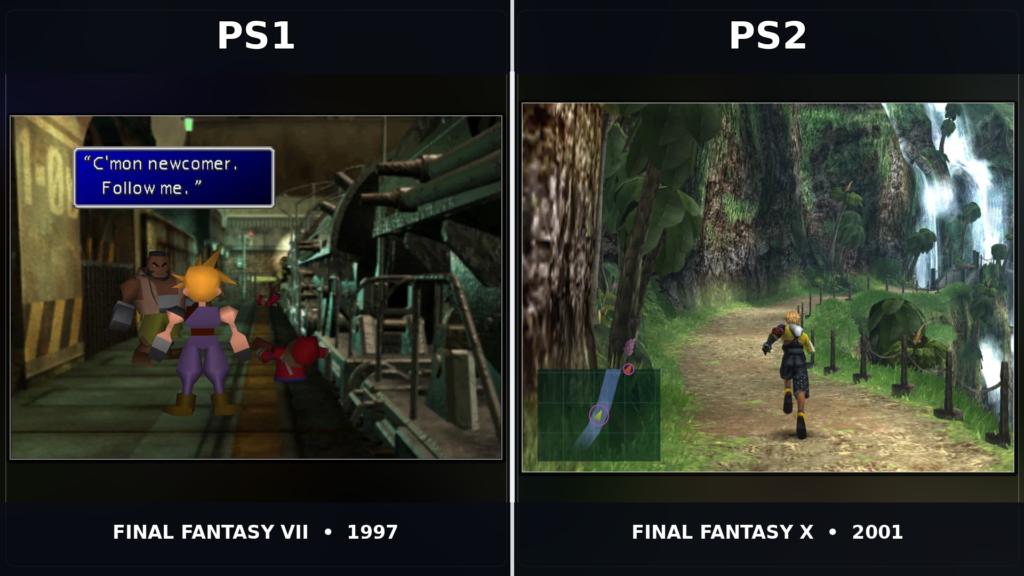
The difference between the PlayStation and PlayStation 2 generations was extraordinary. Today, improvements can be considerably harder to appreciate without a side-by-side comparison, particularly when so many games continue targeting older hardware.
Better performance, sharper visuals, and improved technology are welcome. But if Microsoft asks me to spend $1,500 or more, I need a compelling explanation of what I can play and do that I couldn’t before.
And with no confirmed launch lineup or exclusivity strategy, that value proposition remains uncertain.
More horsepower alone isn’t enough to convince me.
Expensive Hardware, Expensive Games, and Less Ownership
Here’s what bothers me even more: hardware is only the beginning of the bill.
We’ve normalized discussions about $80 games and are increasingly entertaining the possibility of $100 releases. That’s especially frustrating with digital-only purchases.
Digital distribution isn’t free, but eliminating manufacturing, packaging, and physical shipping should create opportunities for savings. Instead, consumers are frequently asked to pay premium prices while receiving fewer ownership benefits.
Digital licenses can restrict resale, lending, and access. Online-dependent games can become unplayable when servers close or the internet goes out. DLC can disappear when storefronts and services shut down.
Physical games aren’t automatically immune, but they typically offer significantly more options for collectors, the used sale market, and preservation.
And now Sony has confirmed that newly released PlayStation games will become digital-only starting January 2028. That makes the push away from physical ownership considerably harder to ignore.

I’ve spoken about the importance of physical media in a variety of forms before, and I refuse to treat those concerns as outdated simply because the industry would prefer we stop asking questions.
At some point, the question stops being whether I can afford it and becomes whether I should even want to.
Nintendo and PC Might Be Enough for Me
Here’s where I’ve landed personally: Nintendo and a PC may be all I need going forward.
Nintendo still makes games that justify its hardware for me, and the Switch’s hybrid design offers something genuinely distinctive. At $500, the Switch 2 certainly isn’t cheap, and Nintendo deserves criticism for its own pricing and Game-Key Cards.
But compared with a hypothetical $1,800 console? Its value proposition looks considerably more appealing.
PC gaming offers something even more exciting: flexibility.
Between Steam sales, DRM-free games on GOG, and the freedom to upgrade individual components, I can keep using hardware I already own instead of buying into another console ecosystem.
But it’s the possibilities for physical game preservation and backward compatibility that have me particularly excited.
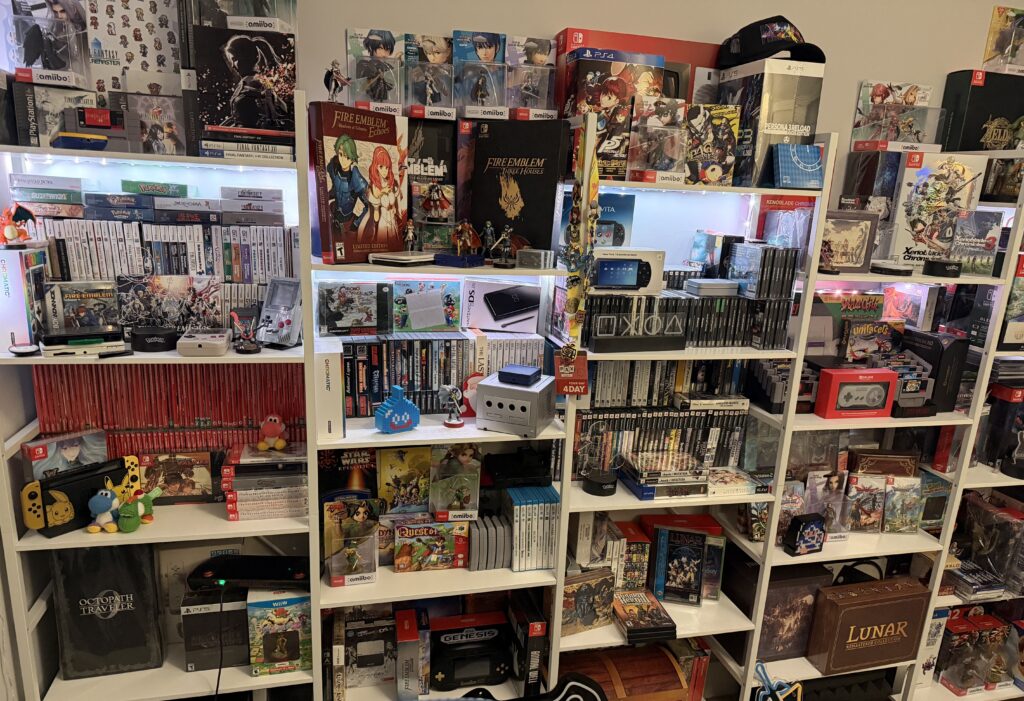
Companies like Epilogue are developing devices that effectively add retro cartridge slots to modern computers. Their GB Operator supports Game Boy, Game Boy Color, and Game Boy Advance cartridges, while the SN Operator brings original SNES and Super Famicom games to PC.
You can play your actual cartridges, back up saves, and preserve game data using modern hardware.
And the emulation community has been making some incredible strides with physical PlayStation games, too.
DuckStation supports playing original PlayStation discs through compatible computer drives. But here’s the really exciting news: the RPCS3 emulator now supports playing physical PlayStation 3 games directly from compatible Blu-ray drives on PC!
The developers expanded this functionality across Windows, Linux, macOS, and FreeBSD in September 2026. You still need a supported drive and the appropriate disc decryption key, but you no longer have to dump the entire game to your hard drive before playing. That’s an enormous development for physical game preservation.

And progress isn’t stopping with the PS3. shadPS4 has made impressive progress with games like Bloodborne, while recent PS5 emulation developments have even demonstrated Demon’s Souls running on PC.
Now, PS4 and PS5 emulation remains experimental, and those systems don’t yet have the same straightforward direct-disc support that RPCS3 offers. But the progress is remarkable.
Think about that. While console manufacturers are moving away from physical media, the PC is becoming an increasingly capable home for the very games they’re leaving behind.
Of course, building a powerful gaming PC can be absurdly expensive. But the long-term flexibility, access to older games, and preservation possibilities make it an increasingly compelling investment for someone like me. Besides, there’s a staggering number of incredible games I already own. I could disappear into my JRPG backlog for decades.
That’s not even a joke anymore.
Gaming Needs to Remain Accessible
I don’t begrudge anyone who wants premium hardware. If Project Helix launches with incredible features and somebody decides it’s worth the money, great!
But gaming shouldn’t increasingly feel like a luxury market where the latest experiences require four-figure hardware, premium-priced games, and subscriptions just to access everything.
And I found it particularly frustrating when PlayStation creator and former Sony executive Ken Kutaragi recently suggested that resistance to abandoning physical media might be a “mentality issue,” in an interview with VGC.
He acknowledged players’ concerns but questioned the economics of continuing physical distribution.
I question the economics of asking consumers to spend nearly $1,000 on hardware while simultaneously reducing their ownership options.
Apparently, we have different concerns.
Maybe Microsoft’s final price will be far below these projections. I hope it is. And maybe the next Xbox will offer something genuinely revolutionary.
But until then, I think the industry needs to answer a much simpler question:
How much more can you ask players to spend before they decide they’re perfectly happy with the games and hardware they already have?
Because right now, that’s exactly where I’m headed.



9 comments
Loved the write up Brandon, the economic crisis and push for AI to replace many jobs is definitely a key reason for the increased prices and I definitely agree that having a PC and a Nintendo Switch really meets all our requirements especially as a JRPG enjoyer.
The other consoles don’t really offer us much in that space especially if they are losing their physical options, there’s no real point for us collectors / enthusiasts to buy it and simply just enjoy the best version of the game on PC and the exclusives on Nintendo.
Being objectively neutral and having business perspective (non-ethical and not pro consumer), consoles are still cheaper and easier to use than a pc for the general population, it’s more difficult to install launchers, you don’t have to fiddle with menus and settings to optimise a game just to play on pc.
Realistically, gaming is definitely STILL one of the cheaper hobbies, most people are not like us and purchase every single game and multiple versions of it.
$1800 is pretty decent if the next life cycle is over 10 years just like the current Consoles, if we use the median amount of games which average gamer purchases, it is around 2-3 games a year so that’s around 200 bucks.
$2000 over a 10 years ($200/year for a hobby) is definitely still one of the cheapest hobbies. It just now has a higher premium to start. (Which isn’t always a detriment to many consumers using the, buy now pay later model ( which is what many people use to purchase the latest iphones by going on a plan (because they can’t afford out right – you’re still paying interest!))
And for all the gun and ball enjoyers, if they even just get 60 fps at 4k resolution for GTA 6 with the new consoles many would probably just buy the console for that and Rock star only just needs to optimise their game for ps6/xbox720.
It’s like when the switch 2 came out and only Mario Kart World was the only game available, but people still bought it to get 4k60fps BOTW and it was backwards compatible with nearly all switch games, Xbox and PS6 just need to do the same thing.
The only issue is users such as ourselves, it’s not backwards compatible with our physical collection and I honestly believe they are willing to lose a consumers like us to make profits off others.
Their strategy to just release digital and live service games already makes a lot of money. The younger generation are mostly playing Roblox, Minecraft and then they move to Valorant.
We might be the last generations, that values physical media sadly and for the new generation, they can’t afford housing, their own pcs, their own cars, they just will get used to not owning anything and will be fine with living a life of subscriptions cause they don’t know better.
I do like the community backlash and people are making systems to be able to run physical media through emulation and appreciate you sharing how we can do it.
Sad reality but it’s honestly fine for us to just not support these companies anymore, we still do have a backlog longer than our life spans.
I’ve never seen Bean say so much!
Sometimes I don’t just troll on discord 😏
Nooooo
I’m in agreement 100% on these concerns about where the direction of console gaming is headed in the near future. I also agree that going with a mix of a Nintendo console and a PC is the best approach for modern gaming. While Nintendo’s approach to physical media is flawed, it’s still much better than what Sony and Microsoft are doing.
When it comes to digital gaming, going the PC route is the better option because it’s approached in a much more gamer-friendly way than consoles. You’ll get less censorship, frequent sales and discount sites for games, and you’ll even functionally own your digital games if you get them from GOG, because they are DRM-free and available in a form to download and play outside of the GOG gaming app.
While gaming PCs are expensive, they are a better investment than consoles because they can also do things that consoles can’t and are upgradeable. While console-like PC gaming devices like the Steam Deck and similar alternatives are expensive, they are still much more affordable than the price range that these next-generation consoles are aiming for.
I think Sony and Microsoft are being too ambitious in their greed, especially because many regions of the world where their largest customer base resides are in a state of economic decline. People just won’t be able to afford these new consoles, and those who can afford it will resent that they are being squeezed for as much money as possible. This could be the beginning of the end of console gaming as a huge phenomenon. As you said, it could be headed toward a place where it’s considered a luxury.
I got a Switch 2
Just need to build a PC
Love this a lot! Everyday I see the prices of this going up and up. I’ve long decided to just stay with my gaming PC that I have for now, as for consoles more then likely going to be sticking with my Switch 2 for a long time. That seems to be enough for now to help get me by because I’m seeing more coming to PC and Switch 2 with more announcements in the recent time. Here’s to hoping things get better at some point for everyone.
There’s no way I’m paying that amount of money for a console.
Assuming the price of components keeps up this trend, I think the only thing that could save the next generation is AI upscaling and optimizations. I know it gets a lot of hate, but improvements like the FSR 4.1 to Xbox consoles and XBOX Ally X are perfect examples of being able to use cheaper hardware to run better models.
So maybe there will be a new console lineup with hardware that is an improvement on the PS5 Pro and Xbox Series X, but not as good as possible, that will make use of these optimizations for the new generation… Otherwise, gaming will not become accessible to most people.
If this is not the case, Nintendo probably has the opportunity to gain an even bigger portion of the market.
Really what is money now a days I guess