
First Impressions: Village in the Shade Is NOT Your Typical Farming Sim
Village in the Shade doesn't waste time subverting the traditions of other farming sims, providing an experience that retains some staples of the genre while also providing something new and unsettling.

When I play a farming sim, there are certain realities I come to expect.
The protagonist is new to town. They acquire a run-down farm from a family member that they can work to bring back to former glory. The townsfolk welcome them in, and the farmer can achieve a peaceful and fruitful life in the community.
It’s a tried and true concept, and it’s one that Village in the Shade wants absolutely nothing to do with.
This survival horror farming sim doesn’t waste time subverting these expectations, creating an experience that retains some staples of the genre while also providing something new and unsettling.
The Mysteries Start with You
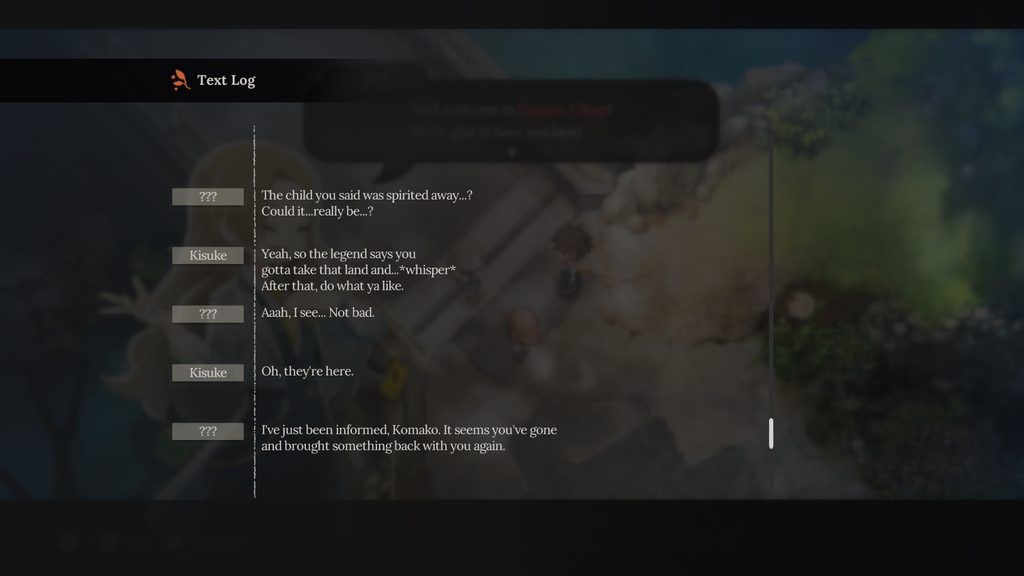
One of the interesting differences in Village in the Shade is that while you have amnesia, the townspeople in the mountain village of Kagetsu know who you are. This immediately drew me into the game’s narrative and showed me it doesn’t waste time any time adding tension.
You play the game as a customizable child. After falling in a hole (more on this later), you crawl out and are found by the town’s hunter Komako. Soon, whether it’s through direct dialogue to you or via conversations you overhear, it’s revealed that the protagonist is someone who’s resided in the village before, and not everyone is happy about your return.
Nevertheless, the town mayor Rin sees you as an asset to Kagetsu, saddles you with the responsibility of revitalizing a dilapidated farm and charges you hundreds of thousands of yen to stay there. To pay it back, you’ve got to work, and that’s where the game’s farming sim mechanics come in.
Farming Mechanics Are Mostly Standard Fare

Village in the Shade’s farming gameplay encompasses a lot of what we usually see in the genre.
At the start, your farm’s field is a mess, and you get tools to clear out branches, stones, and weeds, which also net you raw materials to craft. Then of course you can plant crops based on the season, go foraging and fishing, and raise animals to gain items to ship and earn income.
I appreciated how the game introduced all of these features, too. It doesn’t take long to get access to farming and fishing and so on, but it also doesn’t bombard you with everything at once. It maintains a thoughtful momentum with its farming gameplay, how it introduces certain tasks like villager requests and how it unlocks areas beyond the farm like the quarry for mining.
While playing on Switch 2, I did find some of farming controls to be a bit wonky. When you’re working on the field, for example, you have to press L and strafe to target squares on your field’s grid. At times, this felt cumbersome while using the joy-cons. I would often target a square and then it would swap to another, and it would take me longer to complete tasks like tilling and watering.
It feels like a keyboard and mouse would be the best to use when interacting with the game’s interface, and thankfully, the Switch 2 joy-con’s mouse feature does make it a bit easier.
A Beautiful Village with a Sinister Undercurrent
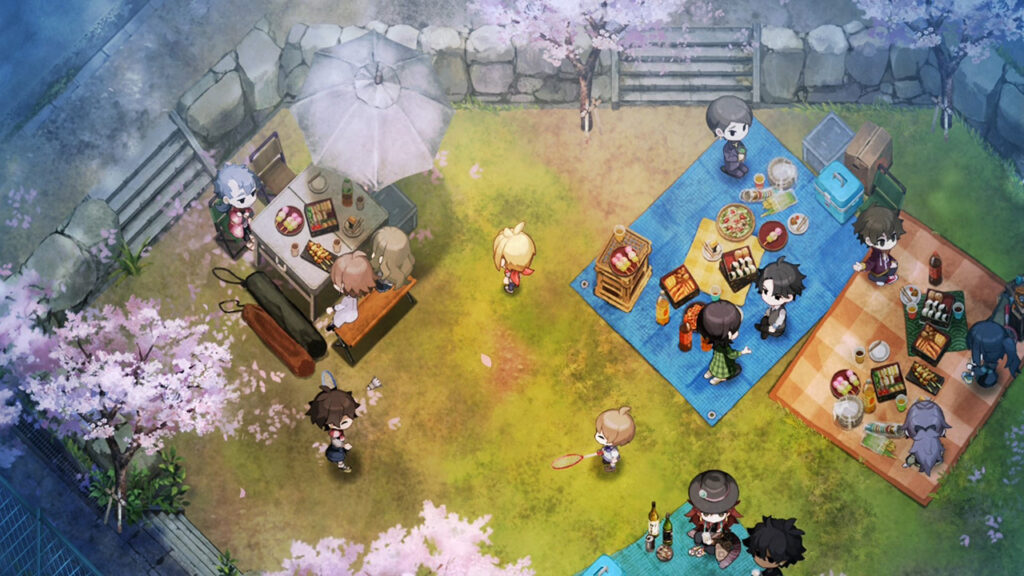
Village in the Shade presents a compelling dichotomy of outward beauty and inner darkness. The village of Kagetsu stuns with the game’s hand drawn art style, and it resembles an idyllic Japanese mountain town.
Small details like cherry blossom petals blowing off trees and the rushing waters of streams make the village feel alive and add to its charm. I never got tired of looking at it, and it made exploring enjoyable in town and off the beaten path. The characters’ chibi artstyle also adds to the wholesome aesthetic.
But the more I play this game, the more I realize it’s all a facade. Something is very wrong in Kagetsu; the cracks begin to show right away, and that’s where this game got its hooks in me.
After acquiring the farm, you must be inducted into the village by sacrificing your first turnip crops. Only then, can you become a true resident.
You offer the crops to a unnamed god by throwing them down a deep hole in the village proper. Shortly after, a cute baby goat from the village is also thrown down the same hole as a sacrifice. You hear its bleats of terror as it goes down and meets its demise.
Once I got over the shock and sadness of that, a lightbulb went off in my head immediately. My character started off her journey being thrown in a hole and crawling out. WHAT DOES THAT MEAN? WHAT ARE THESE VILLAGERS HIDING?

That’s when I knew Village in the Shade wasn’t messing around, and my sentiments haven’t changed after playing several hours beyond that moment.
The game flips the script on the routine we usually see in farming sims. Yes, it has many of traditional gameplay staples, but no day feels the same as the one before thanks to consistent story cutscenes, unique villager dialogue, and an unsettling feeling that just won’t go away.
After 15 hours of Village in the Shade, it’s safe to say I’m seated to see what else this game has in store and what new ways it will freak me out.
If you’re fan of farming sims and slow burn horror elements, I think you’d like it too, and I recommend you look into it further.
And if that’s not you’re thing, the game also has a Village in the Sun mode that removes the horror elements, so you can live out a wholesome farm life without the feeling of existential dread.
As the podcast’s resident horror weenie, I won’t judge you either way. But I encourage you to at least give the game’s default mode a chance to see if the mystery pulls you in.
Because when the game’s truths escape the shade and come into the light, the result is something truly special.



12 comments
I am so here for this game, horror weenies unite!
Yes! I think you’d like it. 😁
As a giant chicken and self acclaimed scaredy cat.
I still wanna try this game.
Feel like amounts tall these great games lately. A farming sim/ horror game would be a nice pallet cleanser
It’s def felt that way to me. We need a break from the intense JRPGs every now and then!
Agreed!
Not a game I’m interested in, but I’m glad fans of these types of games get some more to chew on!
You are just scared!
I feel the same: horror is not my thing, but the concept is still interesting.
Okay super keen beans!! Definitely getting this game!
You said the controls felt clunky and would probably be better with kb and mouse? Would you recommend getting it on steam then or it’s not too bad on switch 2 and feels like a hand held game?
Thanks for putting it out on our Radar!
Appreciate your work!
🐨
Not a giant of Farming sim games but this does look interesting.
You only say that because you are too scared 😏
You say that because you are as well 😂