
Retro Review: Radiata Stories
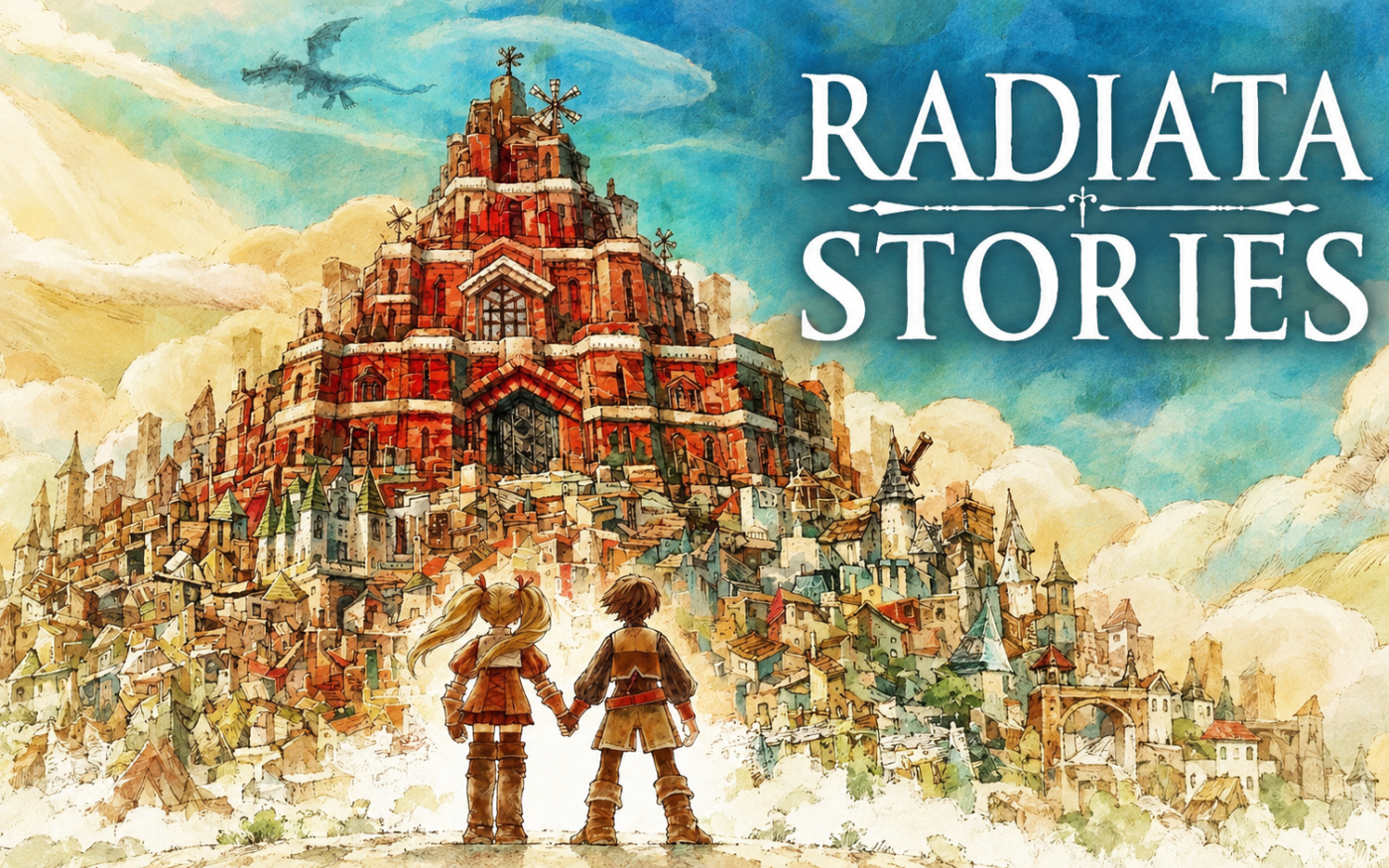
Most RPGs want you to save their world. Radiata Stories wants you to meet everybody living in it, learn their schedules, and then kick them until they fight you… before agreeing to be your friend.
This is adventure like you’ve never known.
Originally released for PlayStation 2 in 2005, Radiata Stories is one of those games I will defend until someone physically removes the keyboard from my hands. Returning to it for a New Game+ reminded me why I fell in love with this strange little adventure—and why, despite everything modern RPGs can accomplish, I still can’t think of much that feels quite like it.
It’s not perfect. Its combat could use more depth, its recruitment systems sometimes feel deliberately hostile toward your free time, and its story makes some choices that aren’t going to please everybody.
But while I can’t give this a 10/10, objectively, it will always be so in my heart.
A Different Kind of Square Enix Adventure
Developed by tri-Ace and published by Square Enix, Radiata Stories arrived during an era when Japanese RPG developers seemed determined to try whatever ridiculous idea had occurred to them that morning. The studio behind Star Ocean and Valkyrie Profile certainly had experience making unusual games, but this one might be its most charming experiment.
You play as Jack Russell, an aspiring knight named after a dog, whose primary qualifications are enthusiasm, overconfidence, and having a famous father. Jack turns up to join the Radiata Knights, promptly gets demolished by fellow recruit Ridley, and somehow still lands the job.
Sweet, sweet, nepotism.
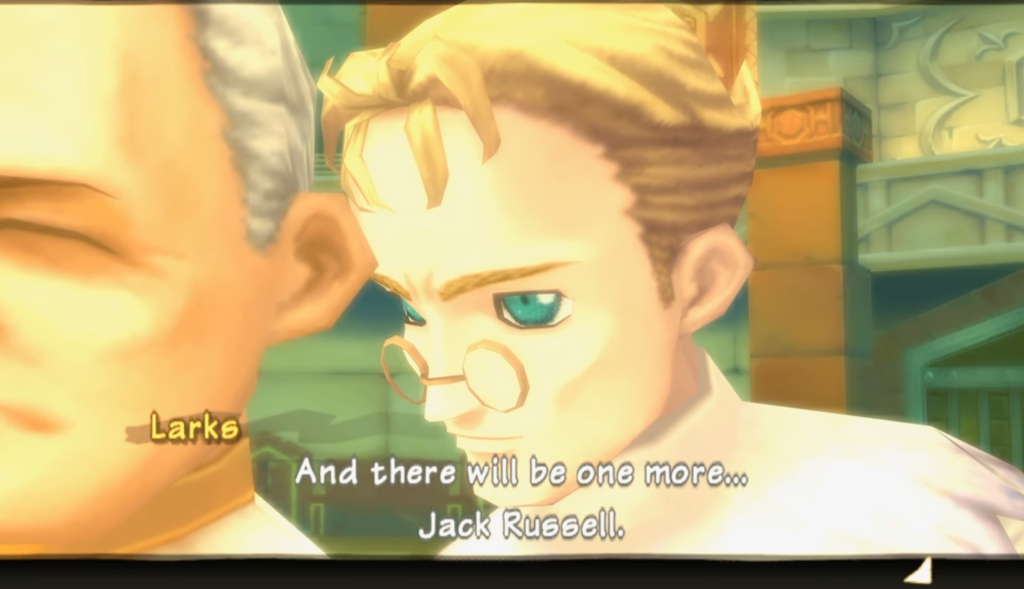
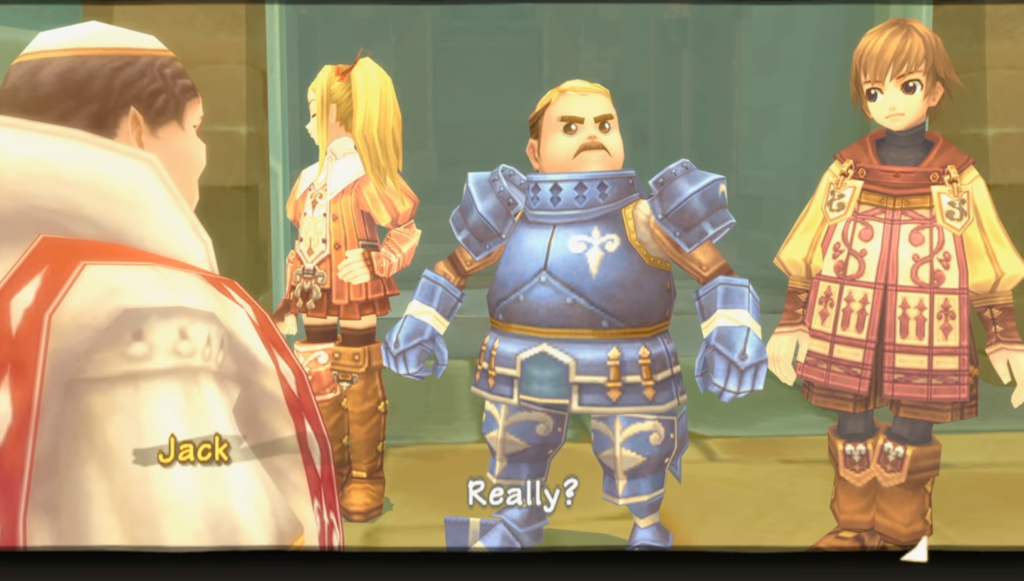
He joins the wonderfully named Rose Cochon Brigade (French for “The Pink Pig”) alongside Ridley and its earnest captain, Ganz, then embarks on a series of jobs that feel almost comically ordinary for an RPG. Deliveries, diplomatic errands, and conversations with people who have considerably more complicated problems than Jack realizes. He wants to be a legendary hero, but this world has absolutely no intention of treating him like one.
That’s what makes the opening work. Beneath the colorful, storybook art direction and Noriyuki Iwadare’s wonderful soundtrack, tensions between humans and other races have been simmering for generations. Jack initially understands very little of it. And frankly, he barely understands how to behave indoors.
Which brings us to the kick button.
A Living World, and the Right to Kick It
In most RPGs, interacting with a townsperson means pressing a button and receiving a line of dialogue. In Radiata Stories, you can talk to them, follow them around town, discover where they work, wait for them to go home, and kick them.
And it’s just as hilarious as you think.
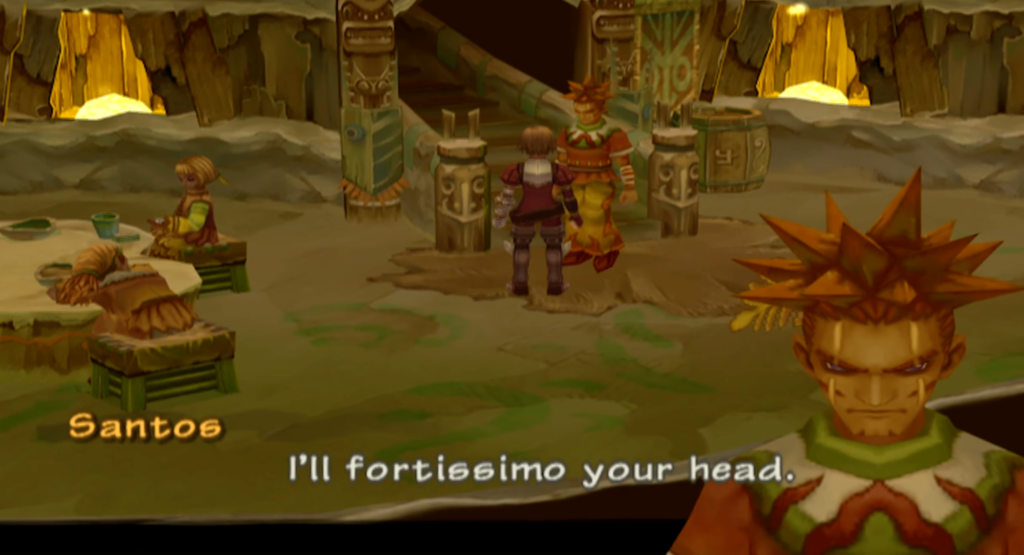
It’s how Jack interacts with doors, furniture, and practically anything that looks suspicious. Kick someone enough and you might provoke a duel. Sometimes that fight leads to experience, rewards, or even a new friendship. I’m still convinced other developers are cowards for not adopting this groundbreaking system.
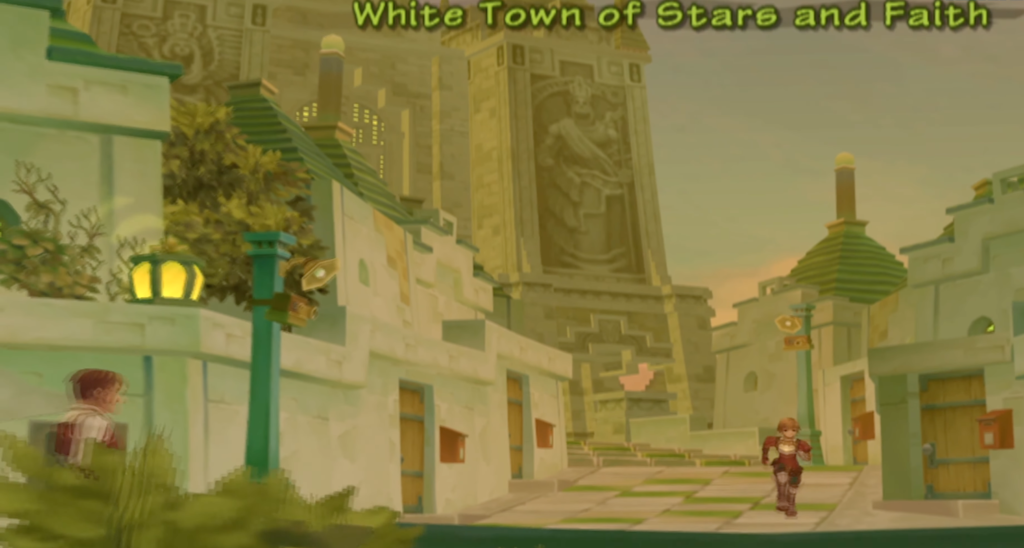
But the joke sits on top of something genuinely impressive. Radiata’s residents live according to individual daily schedules. Shops close, people visit their workplaces and favorite spots, and certain encounters only become available at particular times. Rather than standing around indefinitely waiting for the protagonist, these characters behave as if they’ve got their own lives to worry about.
Even today, when RPGs can construct worlds infinitely larger and more technically impressive, that sense of routine gives Radiata an identity all its own. I don’t remember its citizens because a quest marker told me they were important. I remember them because I spent time learning who they were.
And because I probably kicked them at least once… or thrice. Look, that extra experience is real, okay?
In interviews around the game’s release, the developers described building the world around individual characters and their relationships to the environment. That intention comes through in practically every street and neighborhood.
It’s exactly the sort of ambitious, unconventional creativity that made Square Enix’s PS2-era catalog so exciting. I love the big-budget spectacles as much as anyone, but I’d love to see more games take chances on the kinds of quirky ideas you see in this game.
The Most Delightfully Ridiculous Recruitment System
That attention to everyday life powers Radiata Stories‘ defining mechanic: its enormous cast of potential companions. There are more than 170 recruitable characters, and unlike the traditional RPG approach of collecting a dozen heroes through the main story, this game expects you to go find them.
Some join after completing a favor. Others require you to win a fight, show up at exactly the right time, or meet conditions the game barely explains. Some are powerful. Some are gloriously useless. And some really do need to be kicked before considering a lasting friendship.
I spent part of my return playthrough recruiting characters for the non-human route, including Romaria, a healer who was refreshingly straightforward to win over. But then there was Hyann, a dark elf whose gambling challenge demanded four consecutive wins.
For what, Hyann? To earn the privilege of putting you on my bench because you’re actually a terrible character? Why??
I’m fine. Everything’s fine.
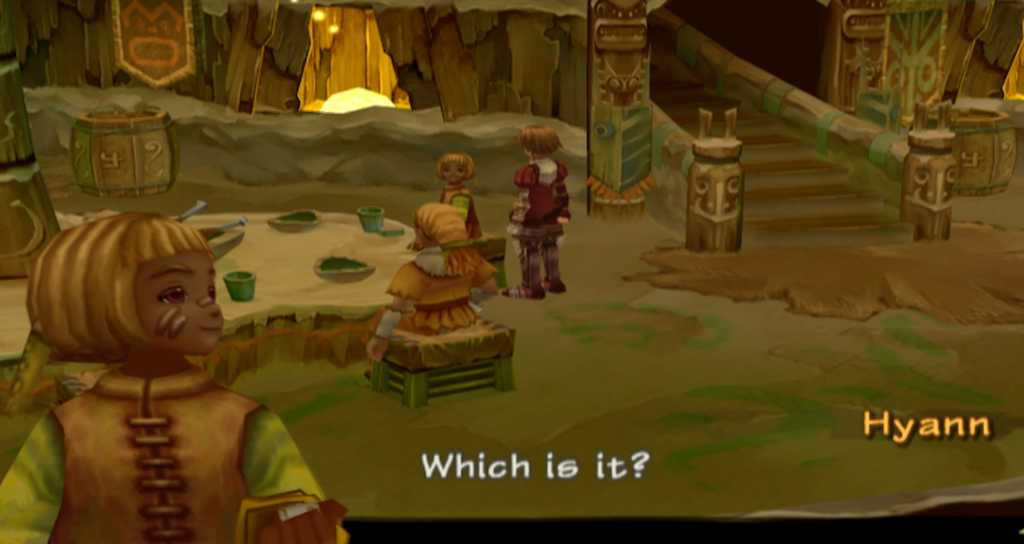
Setting aside Hyann and his terror on my mental health, there is real satisfaction in gradually building your Friends List, particularly because characters have distinct abilities, equipment, and personalities. You’re not simply filling out a collection screen. You’re getting to know the city and its surrounding communities, and deciding whose company you actually want on your adventure.
That said, Radiata Stories sometimes mistakes obscurity for challenge. Without a useful schedule tracker or proper quest log, recruitment can devolve into wandering around at different hours and checking guides to learn what you’ve missed.
I love the idea that people have lives independent of Jack. I don’t necessarily love reconstructing those lives through GameFAQs like it’s 2005 again.
Or do I?
When Your Friendships Become the Story
Where Radiata Stories may surprise you when you first played it is that beneath all its ridiculous comedy is a story willing to take your relationships seriously.
As tensions between humans and non-humans escalate, Jack’s ambitions begin to collide with consequences he can’t simply joke his way out of. His early failures, his relationships with Ridley and Ganz, and the difficult lessons he learns about protecting others gradually push him beyond that self-absorbed kid who wanted to be famous like his father.
Eventually, the adventure forces you to choose between two opposing paths. I’ll keep the specifics spoiler-light, but that decision doesn’t just change a few scenes or determine which ending plays. It changes who stands beside you, who refuses to join you, and sometimes who you’re forced to fight.
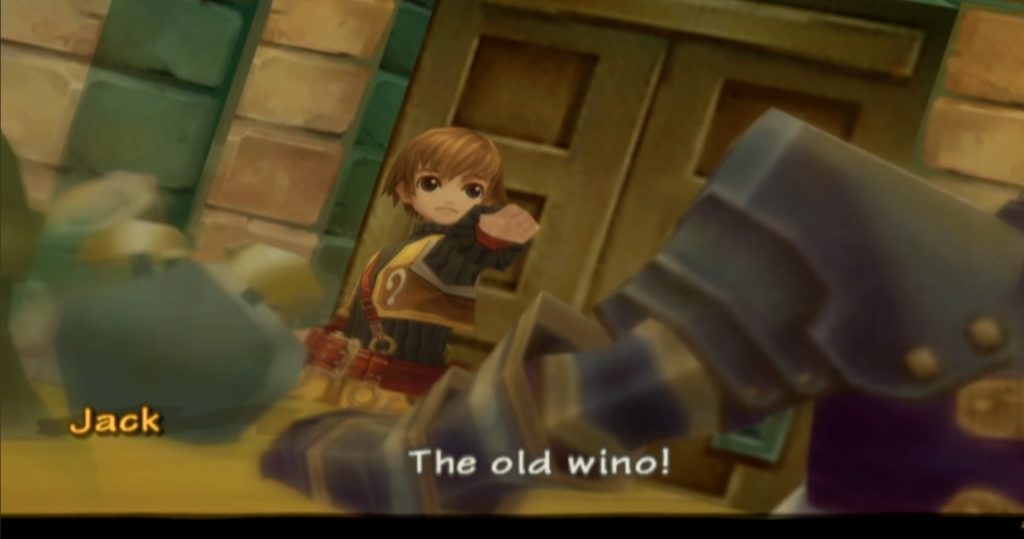
Think about how remarkable that is for a recruitment-focused RPG. You spend hours helping people, earning their trust, and assembling a team, only to discover that being friends doesn’t erase their convictions. The world you’ve been exploring suddenly asks you to take responsibility for your place in it.
Too many games promise consequential choices but hesitate to take anything meaningful away. Radiata Stories lets its relationships make those decisions hurt.
Its tonal shift from cartoonish misadventures to genuinely somber conflict can be jarring, and neither route offers the uncomplicated, everyone-gets-along conclusion my completionist heart desperately wants. I understand why that frustrates people. But there’s also something refreshing about a game willing to let imperfect decisions remain imperfect.
Of course, if Square Enix ever revisits this one, I would happily accept a third route where everybody gets a happy ending and goes out for pancakes. There is actually a two-part manga series that essentially gives what could be a golden ending.
Just saying. I also do really love pancakes.
Still Lovable, Warts and All
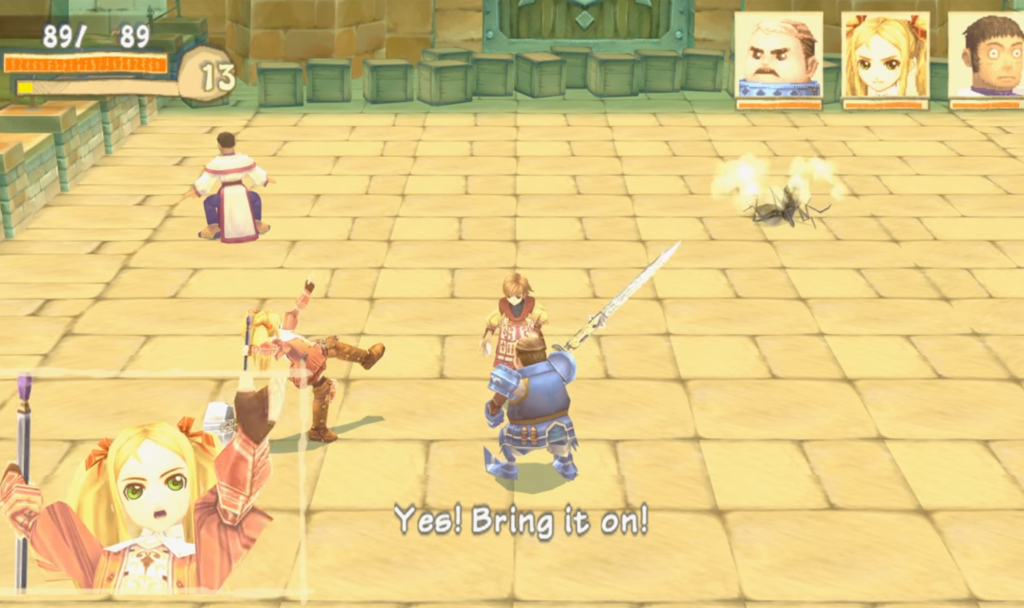
The actual fighting is probably where Radiata Stories has aged the most. Combat is a straightforward real-time affair in which you directly control Jack while three AI-controlled companions support him. Different weapons, customizable attacks, Link formations, and powerful Volty Blasts provide some welcome variety, particularly as your roster expands.
But the systems don’t offer quite the same depth as the recruitment surrounding them. Limited control over your teammates can be frustrating, and I’d love more sophisticated commands, smarter AI, and additional ways to combine characters’ abilities. The creativity of the party-building deserves combat that takes fuller advantage of it.
Thankfully, there’s plenty to keep you playing beyond the ending. Its bonus dungeon includes delightfully excessive tri-Ace crossover encounters, including Valkyrie Profile‘s Lenneth, while stat-enhancing rewards and New Game+ encourage further experimentation. I spent hours improving Jack before setting off again to see the side of the story I’d missed during my original playthrough.
And that’s ultimately why this game has stuck with me. The colorful art still has personality. The soundtrack remains wonderful. The writing can be genuinely hilarious, and the cast makes even ordinary townspeople feel worth remembering. What starts as a goofy story about an aspiring knight turns into a surprisingly thoughtful adventure about loyalty, maturity, and the cost of choosing sides.
Help Preserve Radiata Stories – Vote on GOG!
Unfortunately, Radiata Stories remains stuck on the PlayStation 2, with no official modern release, remaster, or remake. And for a game this creative, charming, and memorable, that’s a darn shame.
However!
Radiata Stories is currently listed on GOG’s Dreamlist, where players can vote for classic games they’d love to see brought back. These votes help demonstrate community interest to publishers and rights holders, potentially paving the way for a modern, DRM-free release.
Will voting guarantee that Square Enix brings it back? Unfortunately, no. But it’s a way to remind them that this wonderful little JRPG still has fans who would LOVE to see it preserved for future generations.
And if you couldn’t tell from this review, I’m absolutely one of them.
Vote for Radiata Stories on GOG’s Dreamlist!
I can tell you right now that I will lose my mind if Square Enix ever brings this one back, especially with new goodies. But if they don’t, maybe this will encourage them to at least port it.
Come on, Square Enix. Let us kick things again!
… See what I did there?
Great
out of 10
The verdict
Radiata Stories is one of the PS2's most imaginative hidden gems, with a wonderfully alive world, endlessly entertaining recruitment, and a story that gives its relationships surprising emotional weight. Its dated combat, cryptic character schedules, and sometimes jarring tonal shifts keep it from being an unqualified classic, but few RPGs—even today—have this much personality. I can explain the 8/10, but there's a reason part of me will always consider it a 10.
- Platforms
- PlayStation 2
- Developer
- Tri-Ace
- Publisher
- Square Enix
- Released
- Sep 6, 2006


9 comments
It’s a 10 and I won’t accept anything less!
It was raised from a 8 to a 8.5! The pressure is mounting
Keep it up,I want it to be a 10, too! I just need to convince the jury to overlook some of the issues!
Alright, fine, FINE, I’ll play it.
I need to do a replay of this. It’s been incredibly long and all I remember is that I enjoyed it, but nothing about the actual content
Never heard of this game before watching the LUL Podcast but it seems like something right up my alley! And the way you talk about it Brandon makes it seem so magical, something akin to Legend of Zelda
It’s like a Saturday morning cartoon in JRPG form!
I love finding new hidden gems. Thanks for the rec!
Me as well.