
Review: Digimon Story Time Stranger
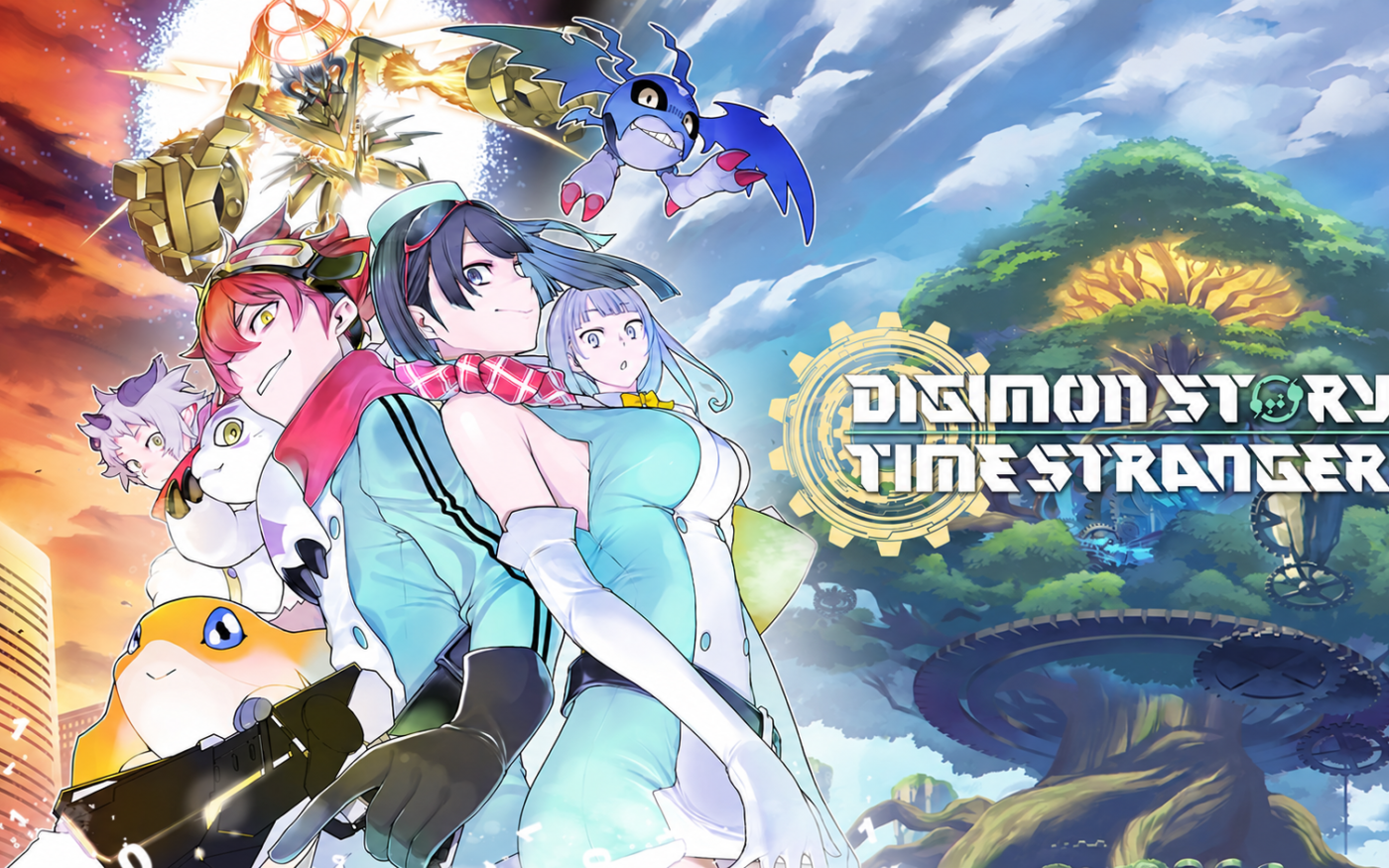
I expected Digimon Story Time Stranger to be an enjoyable return to a franchise I loved growing up. What I didn’t expect was to become so thoroughly invested in its systems that I would continue playing long after completing practically everything it had to offer.
I had previously played Digimon Story Time Stranger at PAX West and walked away impressed, but it wasn’t until its arrival on Nintendo Switch 2 that I finally gave it the attention it deserved. What followed was one of the most addictive monster-taming experiences I’ve ever had.
I finished the story, completed every side quest, worked through the available DLC, and reached the maximum Agent Rank. Even then, I wasn’t ready to put it down. There were still Digimon I wanted to develop, skills I wanted to acquire, and increasingly ridiculous stat combinations I wanted to break.
I mean… experiment with.
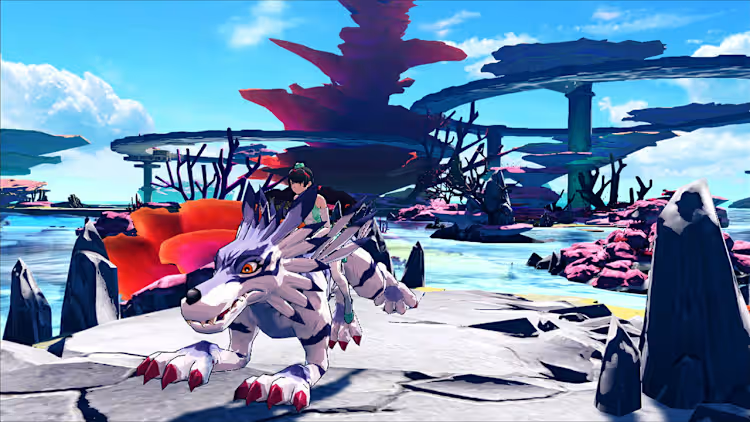
It’s not a flawless experience. Frustrating travel mechanics, overwhelming customization options, and unfortunate late-game pacing occasionally get in the way. But even at its most inconvenient, I rarely wanted to stop playing.
Returning to the Digital World
Digimon Story Time Stranger marks the first new entry in the Digimon Story series since Cyber Sleuth – Hacker’s Memory, originally released in 2017. And that was particularly appealing to me because my relationship with Digimon has largely been defined by nostalgia. Growing up, I was obsessed with Digimon alongside Pokémon and Monster Rancher. I loved the early anime seasons, collected the toys, owned Digivices, you name it.
Returning to familiar Digimon like Agumon, Gabumon, Patamon, and Gatomon was exciting enough. Discovering hundreds of unfamiliar forms introduced over the years made the experience considerably more interesting.
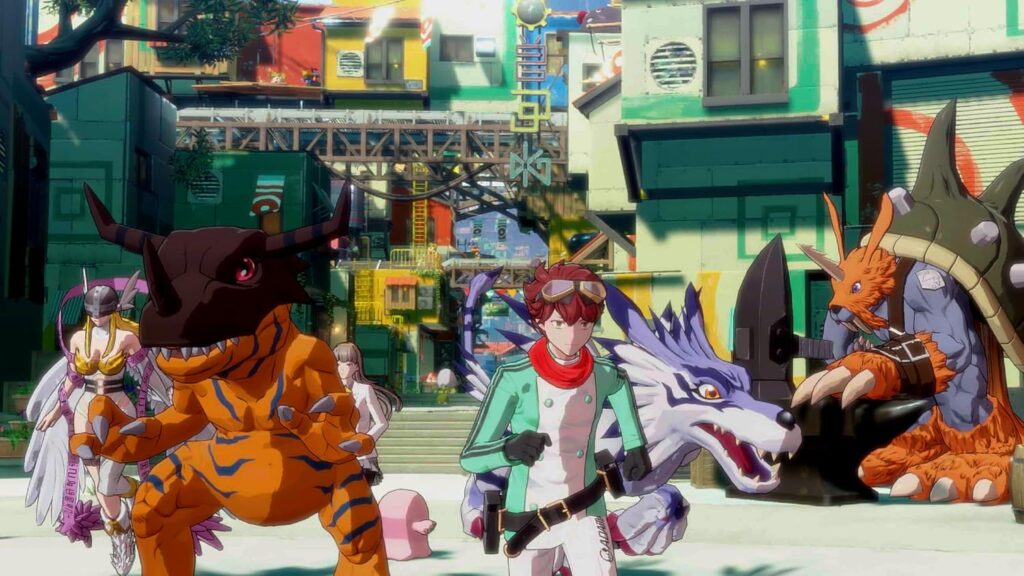
The story places you in the role of an agent working for ADAMAS, an organization investigating mysterious paranormal phenomena. Things quickly take an unexpected turn during an investigation in Tokyo, where you encounter a young woman named Inori who somehow recognizes you. A catastrophic incident soon follows, sending you eight years into the past and establishing a larger mystery involving the human world and the Digital World of Iliad.
As someone fascinated by paranormal mysteries and cryptids, I loved the suggestion that Digimon might be responsible for unexplained phenomena throughout human history. The opening establishes an intriguing mystery without requiring extensive knowledge of previous games, giving newcomers plenty of reasons to keep exploring.
The Endless Possibilities of Digivolution
The defining feature of Digimon Story Time Stranger is undoubtedly its Digivolution system, which transforms a familiar monster-taming formula into something remarkably addictive.
Rather than capturing Digimon traditionally, encountering them in battle allows you to scan their data. Once you’ve accumulated enough, you can convert that data into a Digimon of your own. Conversion becomes available at 100%, although continuing to 200% provides a stronger starting point. And, I mean, why wouldn’t you do that?
Things become considerably more interesting once you begin exploring the evolution trees.
Instead of following predictable paths, Digimon can develop into numerous different forms depending on their stats, personalities, Agent Rank, and other requirements. De-Digivolution allows you to reverse that process and explore entirely different branches.
I loved how frequently this encouraged me to reconsider my collection. I could begin raising a familiar childhood favorite like Patamon, investigate its evolutionary possibilities, and eventually discover creatures I’d never encountered before. Suddenly, developing that particular Digimon became a project of its own.
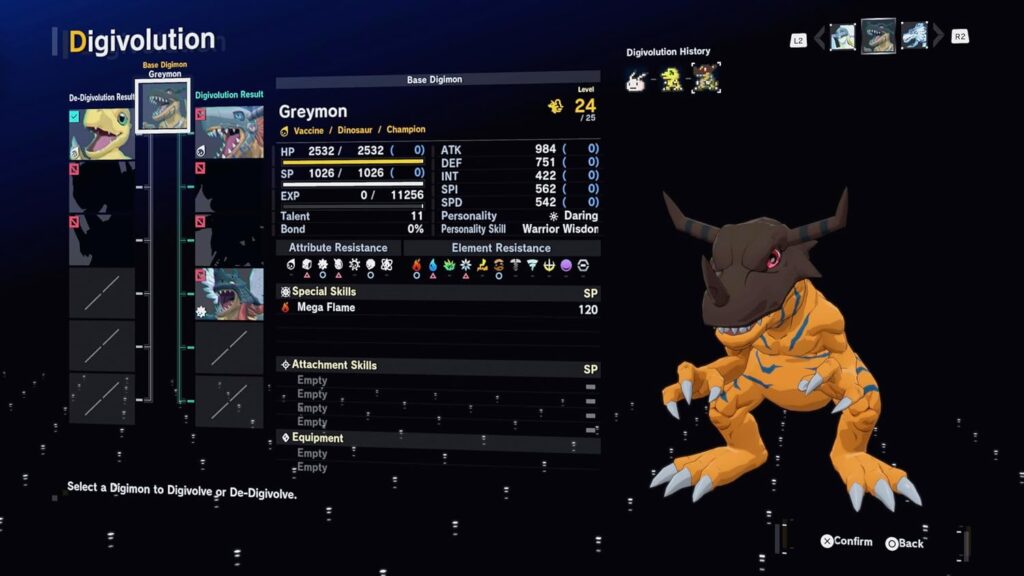
Attachment Skills add another layer, allowing Digimon to acquire abilities that can be equipped onto other members of your collection. I regularly raised creatures I had no intention of using in battle simply because their evolution paths contained skills I wanted for someone else.
Combat gives these decisions meaningful purpose. Battles feature three active Digimon, with additional party members available to swap in as needed. The Vaccine, Virus, and Data attributes establish a foundation of strengths and weaknesses, while elemental affinities, buffs, debuffs, and status effects introduce additional strategic considerations.
What makes Digimon Story Time Stranger special is how effectively these systems complement one another. Building a strong team isn’t simply about acquiring powerful creatures. It’s about understanding how the available mechanics can be manipulated to make those creatures even better.
And did I manipulate all of this to break the game? … maybe.
Progression That Always Gives You Something to Chase
One of the smartest design decisions is the Agent Rank system, which provides structured progression even when players begin pushing the mechanics to their limits.
And I had a legal and scientific obligation to reflect these game-breaking players.
Agent Rank increases through story progression and side quests, determining which higher-level Digivolutions become accessible. Developing extraordinarily powerful Digimon doesn’t necessarily grant immediate access to every evolutionary form.
I discovered the importance of this system relatively early.
Through Load Enhancement, which allows you to sacrifice unwanted Digimon to strengthen others, I realized I could repeatedly collect weaker Digimon and use them to improve my main team. Combined with the Ultimate Edition’s EXP dungeon and bonus Digimon, I eventually raised Agumon – Bond of Bravery and Gabumon – Bond of Friendship to level 99 while still at approximately Agent Rank 2.
Needless to say, the local sewer population suffered tremendously.
Ordinarily, becoming that powerful so early risks undermining an RPG’s progression. Digimon Story Time Stranger avoids much of that problem by separating raw power from evolutionary advancement.
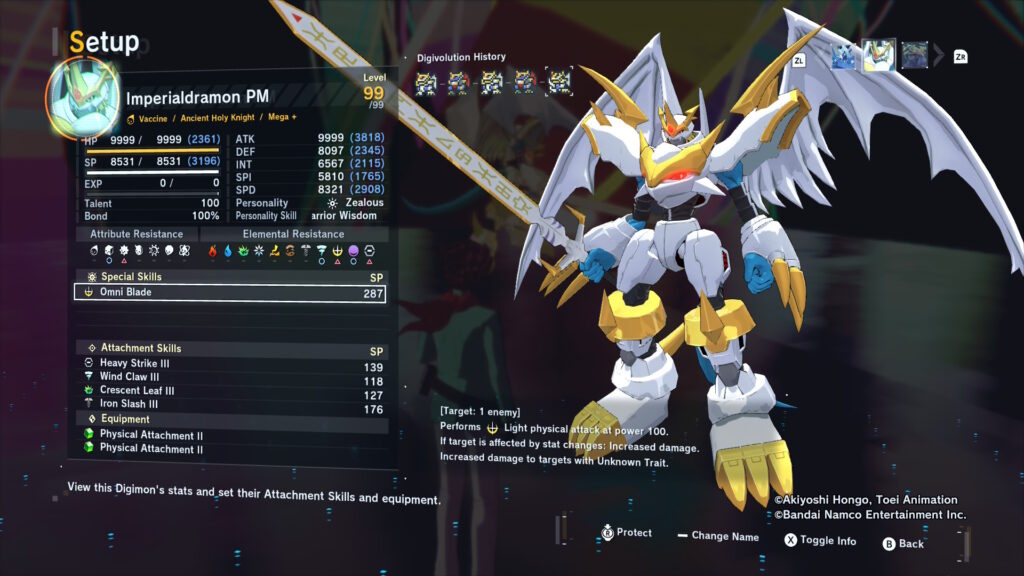
Even with an exceptionally strong party, I still had numerous Digivolution paths waiting to be unlocked. Every rank increase introduced new possibilities, encouraging me to experiment with different forms, acquire additional skills, and develop Digimon I hadn’t previously considered using.
The game also rarely punishes experimentation. If I developed a Digimon along one path and changed my mind, I could reverse its evolution and pursue something different. Two players might both have an Examon, but their choices regarding skills, training, and statistics could produce very different results.
That freedom gives your collection a wonderful sense of personal ownership. It’s the same feeling that made me fall in love with Pokémon as a kid, only with considerably deeper RPG systems to explore.
A Story With More Heart Than I Expected
Although gameplay remained my primary motivation, Digimon Story Time Stranger‘s story and characters ended up being considerably more compelling than I anticipated.
At the center of the narrative are Inori and Aegiomon, whose relationship provides much of its emotional foundation. As the adventure expands into Iliad, the cast grows considerably, introducing numerous Digimon, factions, and supporting characters.
What impressed me most was how frequently those characters remained relevant. Rather than introducing supporting characters who contribute briefly before disappearing, familiar faces regularly return, allowing smaller developments to contribute to events much later.
I wouldn’t consider the story one of the genre’s greatest achievements. Some developments are predictable, and the time-travel elements occasionally rely on the sort of logic JRPG fans have learned to accept. Nevertheless, I was far more invested than I expected.
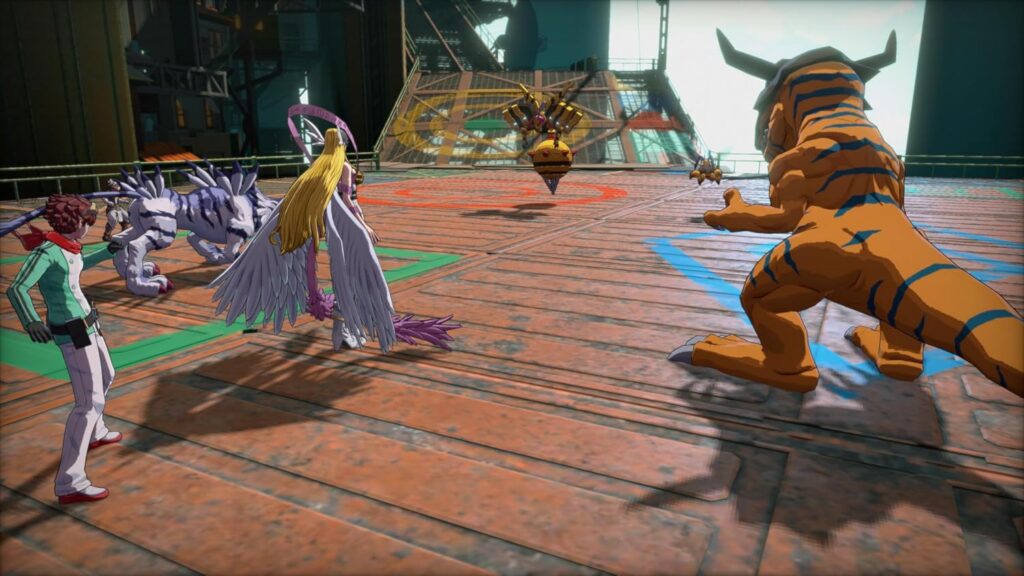
Late in the adventure, a substantial optional questline involving the Royal Knights becomes available. Completing it can produce an additional payoff during the climactic events, bringing characters and Digimon you’ve spent time helping into the larger conflict.
Without spoiling the specifics, that moment was SICK.
What made it memorable was realizing that the time I’d spent completing optional objectives had contributed to something meaningful. I wish more RPGs approached side content this way, allowing its consequences to extend beyond experience points and equipment rewards.
When the Adventure Loses Its Momentum
Despite how much I enjoyed Digimon Story Time Stranger, several decisions prevented the experience from reaching its full potential.
My first disappointment was how quickly the adventure moves away from the paranormal investigation atmosphere established during its opening chapters. I would’ve loved to spend more time investigating mysterious incidents throughout Tokyo while uncovering a larger Digimon conspiracy.
I enjoyed where the narrative eventually went, but that initial premise offered an intriguing opportunity I wish the developers had explored further.
A more persistent frustration involved traveling between locations. Moving between the human world, Iliad, and different time periods can require navigating several transportation systems. Individually, these steps aren’t especially troublesome, but repeating them throughout a lengthy adventure becomes a bit much.
Considering the technological advancements available to these characters, I’m genuinely surprised nobody invented some Digimon space-time Uber.

This becomes particularly noticeable during the final chapters, when an unusually large collection of optional quests suddenly becomes available.
For much of the game, side content arrives at a comfortable pace. You advance the story, complete a handful of objectives, earn Agent Points, and continue your adventure. Unfortunately, the final stretch disrupts that balance.
The Royal Knights questline alone consists of sixteen missions, with additional prerequisites contributing to an already substantial collection of late-game objectives. While many are enjoyable, their placement conflicts with the story’s increasing urgency.
Worse, some of the best narrative payoffs are hidden behind this content. Players eager to reach the conclusion could understandably skip these quests and miss some of the game’s most satisfying moments.
There’s also the question of accessibility. Between personalities, Agent Skills, Attachment Skills, Digivolution requirements, DigiFarm training, and Load Enhancement, there’s a tremendous amount to understand.
Personally, I loved discovering how these mechanics interacted. But players looking for a straightforward monster-taming experience may find themselves overwhelmed. A more gradual introduction would’ve made the deeper systems considerably more approachable.
An Adventure I Wasn’t Ready to Finish
Despite those frustrations, Digimon Story Time Stranger delivers an immensely satisfying experience.
The final confrontation embraces the spectacle and escalating stakes synonymous with major JRPG finales. While the time-travel narrative occasionally stretches credibility, the relationships established throughout the story provide enough emotional weight to make its conclusion feel earned.
What surprised me most, but perhaps not you, dear reader, was what happened afterward.
Even after completing practically everything, I continued looking for opportunities to improve my collection. Eventually, I created extraordinarily powerful versions of Digimon like Chronomon and Jupitermon, maxing out every single stat, which was completely unnecessary for anything I still needed to accomplish.
But I was addicted.
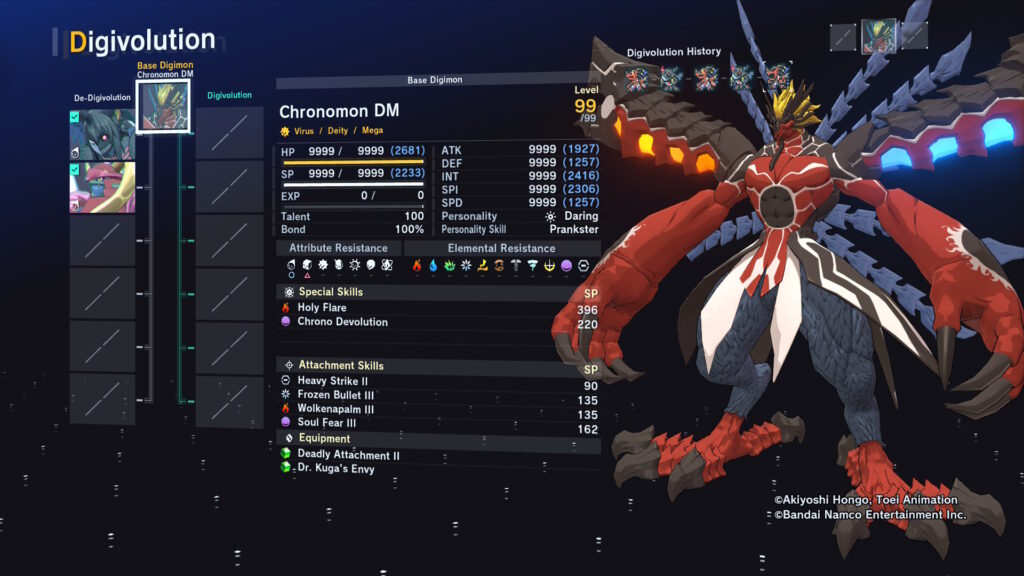
I also completed the available DLC, which provided additional opportunities to spend time with the game. While fun, I wouldn’t consider it essential. The main adventure already feels very complete.
That’s probably the greatest compliment I can give Digimon Story Time Stranger. Its progression remained satisfying even after I’d exhausted practically every reason to engage with it.
Great
out of 10
The verdict
Digimon Story Time Stranger is an incredibly rewarding monster-taming RPG whose interconnected systems make collecting, developing, and experimenting with Digimon remarkably addictive. Despite cumbersome travel, overwhelming customization, and uneven late-game pacing, its satisfying progression and surprisingly engaging story kept me invested throughout. It captures the excitement I felt discovering Digimon as a kid while offering the depth I've come to appreciate as an RPG fan.
- Platforms
- Nintendo Switch 2
- Released
- Jul 10, 2026


3 comments
Was my biggest surprise game of 2025!
I hope Digimon can keep carrying this momentum into another game!
Really want to try this game out now. Hoping to pick this up soon because I keep hearing good things about it
Been eyeing this game for a while now. I’ll definitely be giving this one a go!