
Review: The Blood of Dawnwalker

I’ve always had a soft spot for RPGs that aren’t afraid to do something different. Even when those ideas don’t entirely work, there’s something exciting about experiencing a game that refuses to follow the same blueprint I’ve seen countless times before. The Blood of Dawnwalker is one of those games, and after finishing the game, I’m convinced its ambition is both its greatest strength and its most frustrating weakness.
There were moments when I was completely enamored with what this game was doing. I’d finish a quest, consider my options, and immediately start plotting my next move. Before I knew it, another two hours had disappeared. But there were just as many occasions when I found myself questioning why certain mechanics needed to be quite so restrictive.
That’s the strange relationship I developed with The Blood of Dawnwalker. Some of the things I admire most about it are also the things that occasionally drove me crazy.
And somehow, I still couldn’t put it down.
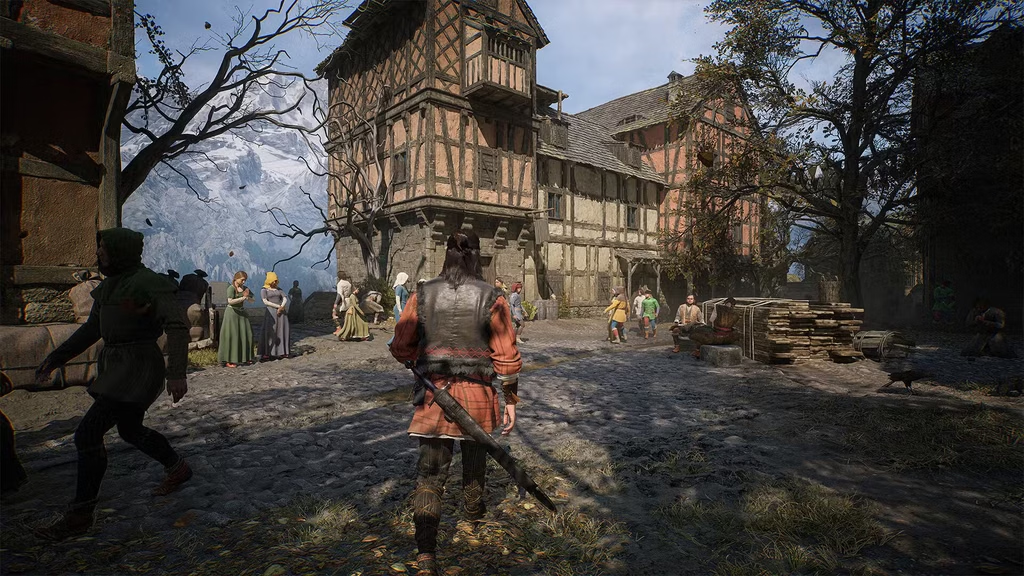
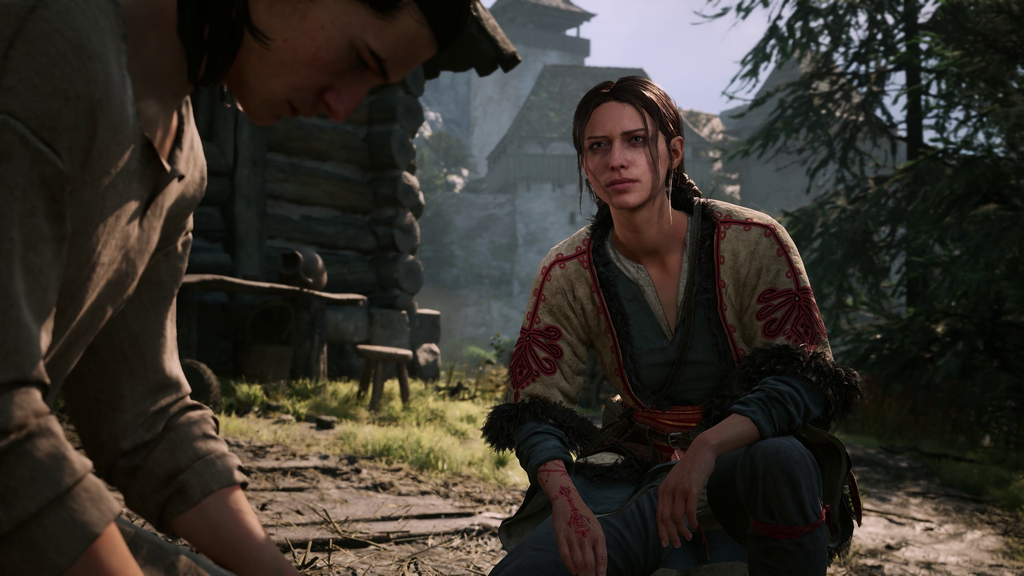
Developed by Rebel Wolves, a studio founded by several former CD Projekt Red developers, The Blood of Dawnwalker is an open-world dark fantasy action RPG set in an alternate 14th-century Europe. Against the backdrop of war and the Black Death, a powerful group of vampires has seized control of the region of Vale Sangora, establishing a new order with humanity at its mercy. At the center of this conflict is Coen, a young man transformed into a Dawnwalker, a unique being who exists as a human during the day and a vampire at night.
With only 30 days to rescue his family from the clutches of the vampire rulers, Coen must navigate a world filled with political intrigue, supernatural threats, and difficult moral decisions. Drawing inspiration from classic RPGs while introducing its own narrative sandbox approach, The Blood of Dawnwalker places an unusual emphasis on player agency, where the quests you pursue, the alliances you forge, and even the opportunities you ignore can dramatically influence how your story unfolds.
A Race Against Time
The defining feature of The Blood of Dawnwalker is its 30-day time limit, a mechanic that fundamentally changes how I approached nearly everything.
I’m accustomed to taking my time with RPGs. I enjoy wandering off the beaten path, stumbling into unexpected quests, and thoroughly exploring a world before committing to its main objectives. Dawnwalker, however, has very little interest in accommodating that mentality.
Certain activities advance the clock, sometimes by several hours or more, meaning every decision carries an underlying cost. Suddenly, I’m not just considering whether I want to pursue a quest, but whether it’s worth sacrificing precious time to do so.
Conceptually, I love this. It gives my decisions genuine weight and makes even relatively minor activities feel consequential. Rather than mindlessly clearing objectives from a map, I’m constantly weighing my priorities.
In practice? I wasn’t always having quite as much fun.
The day-and-night system is a perfect example. Both offer distinctly different gameplay experiences, but I quickly discovered that I vastly preferred embracing my vampiric abilities after sunset. Unfortunately, getting to nighttime sometimes meant advancing the clock, which created an irritating dilemma. I wanted to experience the game in the way I found most enjoyable, but doing so meant potentially sacrificing opportunities elsewhere.
I occasionally found myself avoiding experimentation altogether because I didn’t want to waste time. And that’s a strange feeling to have in an RPG built around giving me so many interesting ways to approach its world.
Still, I understand what the developers are going for. The Blood of Dawnwalker isn’t designed around seeing and doing absolutely everything in one playthrough. I’m supposed to miss things, make difficult decisions, and wonder what might have happened if I’d taken another path.
I respect that philosophy. I just can’t pretend I enjoyed every moment of living with it.
Earning My Place in the World
My relationship with combat followed a similar trajectory, although it took considerably longer for me to appreciate what the game was trying to accomplish. Frankly, the opening hours can be a slog.
Early encounters frequently overstayed their welcome, and even relatively unremarkable enemies could turn into drawn-out fights. I didn’t have many abilities at my disposal, and venturing too far beyond the areas I was comfortable exploring often felt like asking for trouble.
There’s something particularly irritating about spending an excessive amount of time fighting a handful of ordinary enemies when the game is simultaneously reminding me that time is my most valuable resource. Thankfully, things improve. Dramatically.
As my abilities expanded and I became more familiar with the combat system, I started recognizing a surprising amount of strategic depth beneath those initially cumbersome encounters. Fights that once felt exhausting became opportunities to put everything I’d learned into practice.
Eventually, I reached a point where I felt borderline unstoppable, and that transformation was immensely satisfying.
What I appreciated most was that my growing confidence didn’t come exclusively from acquiring better abilities or increasing my character’s strength. I was genuinely becoming better at the game. I understood its mechanics, recognized opportunities, and approached encounters with a level of confidence that would’ve seemed impossible during those opening hours.
It’s an excellent sense of progression, even if getting there required more patience than I would’ve preferred.
The Court Is Where The Game Finds Its Identity
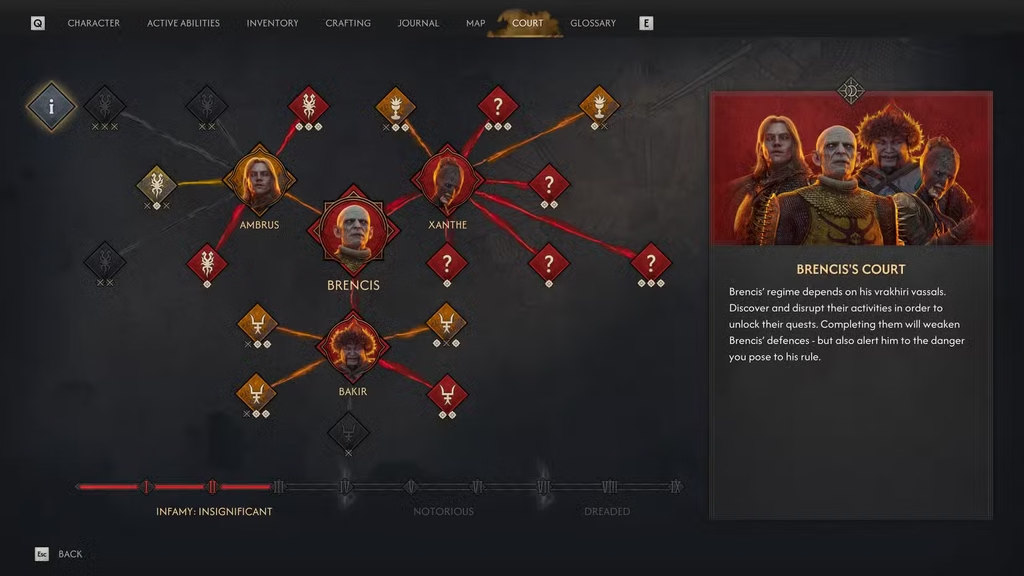
One of my favorite aspects of The Blood of Dawnwalker is its Court system, which revolves around undermining the game’s central antagonist and the individuals maintaining his power. I won’t spoil the specifics, but I absolutely loved the idea of gradually dismantling an established power structure through my actions in the world.
It gives the surrounding quests a purpose beyond the usual pursuit of experience points and better equipment. I’m not simply helping random people because there’s another objective waiting to be crossed off my checklist. I’m actively creating problems for the people standing in my way. The more I engaged with this system, the more I started appreciating how interconnected everything really was.
The problem is that Dawnwalker sometimes becomes so preoccupied with encouraging me to engage with its world that it forgets I might also want the main story to move forward. There were stretches when I was genuinely excited to see what happened next, only to realize I needed to spend more time exploring, leveling up, or disrupting the Court system before anything substantial would happen.
Some of these detours were fantastic. I encountered genuinely interesting side quests, strong writing, and situations I hadn’t anticipated. Those moments made the world feel worth investigating.
Others? Not so much.
Clearing another bandit camp, defeating a handful of enemies, or destroying some conveniently placed objects isn’t particularly exciting when I’m itching to see the next major story development. This creates an unusual rhythm where I’m constantly making progress mechanically, yet occasionally feel like I’m standing still narratively.
I also found the lack of direction frustrating early on. I appreciate games that trust me to figure things out for myself, but there’s a difference between encouraging discovery and leaving me wandering around wondering what I’m supposed to accomplish. When I’m simultaneously learning combat, managing a time limit, understanding the day-and-night cycle, and figuring out an entirely unfamiliar progression system, a little more guidance wouldn’t have hurt.
A World I Wanted to Get Lost In
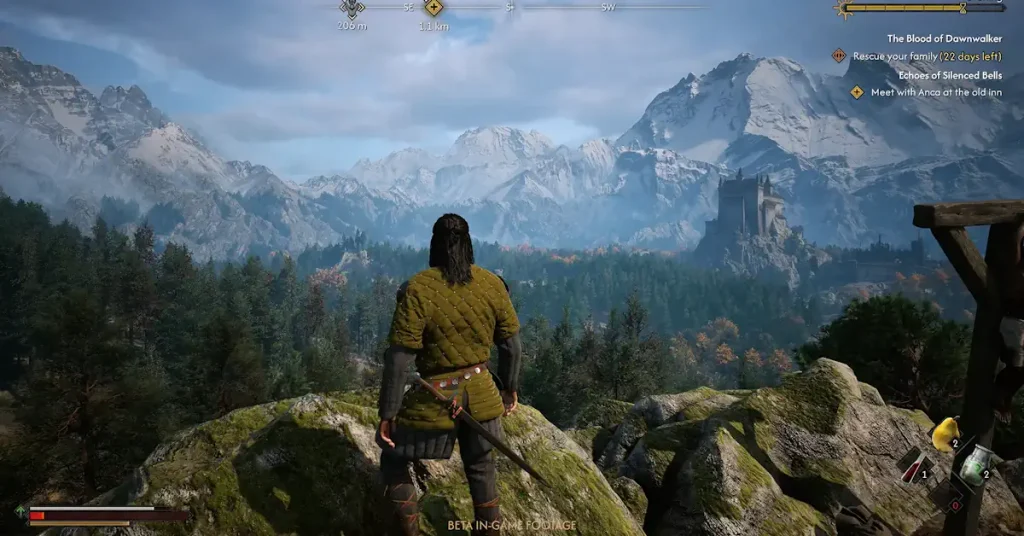
One area where I had considerably fewer complaints was the presentation. The Blood of Dawnwalker is a gorgeous game, with a grim, grounded aesthetic that immediately reminded me of The Witcher. Whether I was traveling through the countryside, exploring settlements, or simply admiring the way the lighting transformed the environment, I regularly found myself stopping to appreciate the scenery.
Nighttime is where everything truly comes together. There’s an atmosphere to these sections that perfectly complements the vampiric gameplay, and I suspect that’s part of why I found myself gravitating toward them so frequently. It’s a world I genuinely wanted to spend more time exploring, which only made the restrictions imposed by the ticking clock that much more bittersweet.
When Everything Finally Clicks
The most interesting thing about The Blood of Dawnwalker is that I can’t point to one particular quest or story moment where everything suddenly came together. Instead, it happened gradually, as I stopped thinking about its various mechanics as separate systems.
Time management, combat, exploration, character progression, and the Court all started feeding into one another. I wasn’t simply deciding where to go next anymore. I was thinking about when I should go, whether I was adequately prepared, how much time an objective might require, and what consequences it could have elsewhere.
I’d finish one quest and immediately start considering three different possibilities for what to do next. Maybe I should wait until nighttime. Perhaps I should investigate that other location first. Or maybe I could accomplish both objectives if I approached things differently.
Before I knew it, I’d spent another several hours playing and that’s when I realized just how much I liked this game.
There’s a confidence to The Blood of Dawnwalker’s design that I find incredibly appealing. It isn’t particularly concerned with making sure I experience everything, nor does it seem interested in accommodating every preference I bring into its world. Sometimes I found that refreshing. Other times, I found it infuriating. But I was rarely ever bored.
An RPG That’s Better for Taking Risks
I don’t think The Blood of Dawnwalker is going to be an RPG I remember for its flawless execution. Its opening hours are rough, its narrative pacing is inconsistent, and some of its side content feels disappointingly routine. I’m also still not entirely convinced that its time-management mechanics consistently make the experience more enjoyable. But I’m convinced there’s something special here.
I love how satisfying combat becomes once everything starts clicking. I love the Court system and the way it gives my actions a larger purpose. I love the atmosphere, particularly at night, and I appreciate how willing the game is to let me live with the consequences of my decisions. More than anything, I appreciate that The Blood of Dawnwalker has a clear identity.
I’ve played plenty of RPGs that are technically more polished, more accommodating, and arguably better paced, yet leave me with very little desire to return once the credits roll. This game had the opposite effect.
Even after spending hours wrestling with its mechanics and occasionally questioning its design decisions, I found myself thinking about everything I’d missed. I wanted to go back, make different choices, and see how dramatically my experience might change.
The Blood of Dawnwalker is messy, ambitious almost to a fault, and occasionally its own worst enemy. But I’d much rather experience a game willing to take meaningful risks than one that plays everything safe.
Great
out of 10
The verdict
The Blood of Dawnwalker is an ambitious RPG that isn't afraid to challenge genre conventions, even when its ideas don't always work in its favor. Despite some frustrating mechanics, uneven pacing, and a rocky start, I found myself completely invested in its world, rewarding combat, and wonderfully interconnected systems. It's far from perfect, but its willingness to take risks gives it an identity all its own. More importantly, it's an experience that left me eager to jump back in and discover everything I missed the first time around.
- Released
- Sep 3, 2026


8 comments
Hey, awesome review!
It was awesome, wasn’t it!
This game looks amazing. I will for sure eventually get it. As a first game for this series it seems to be super promising. I hope it eventually gets ported to Switch 2.
Might pick it up if it comes to the Switch 2.
I hope it does. But since it’s a new studio, maybe in a couple of years it happens
Great review! I’ll definitely be checking this one out!
Same. Might have to look more into this myself.
I’m looking forward to getting to this. The time mechanic does make me a little nervous, but if it isn’t intrusive as other reviews have suggested, it should be okay. Hopefully.
Everything else about it looks amazing.